
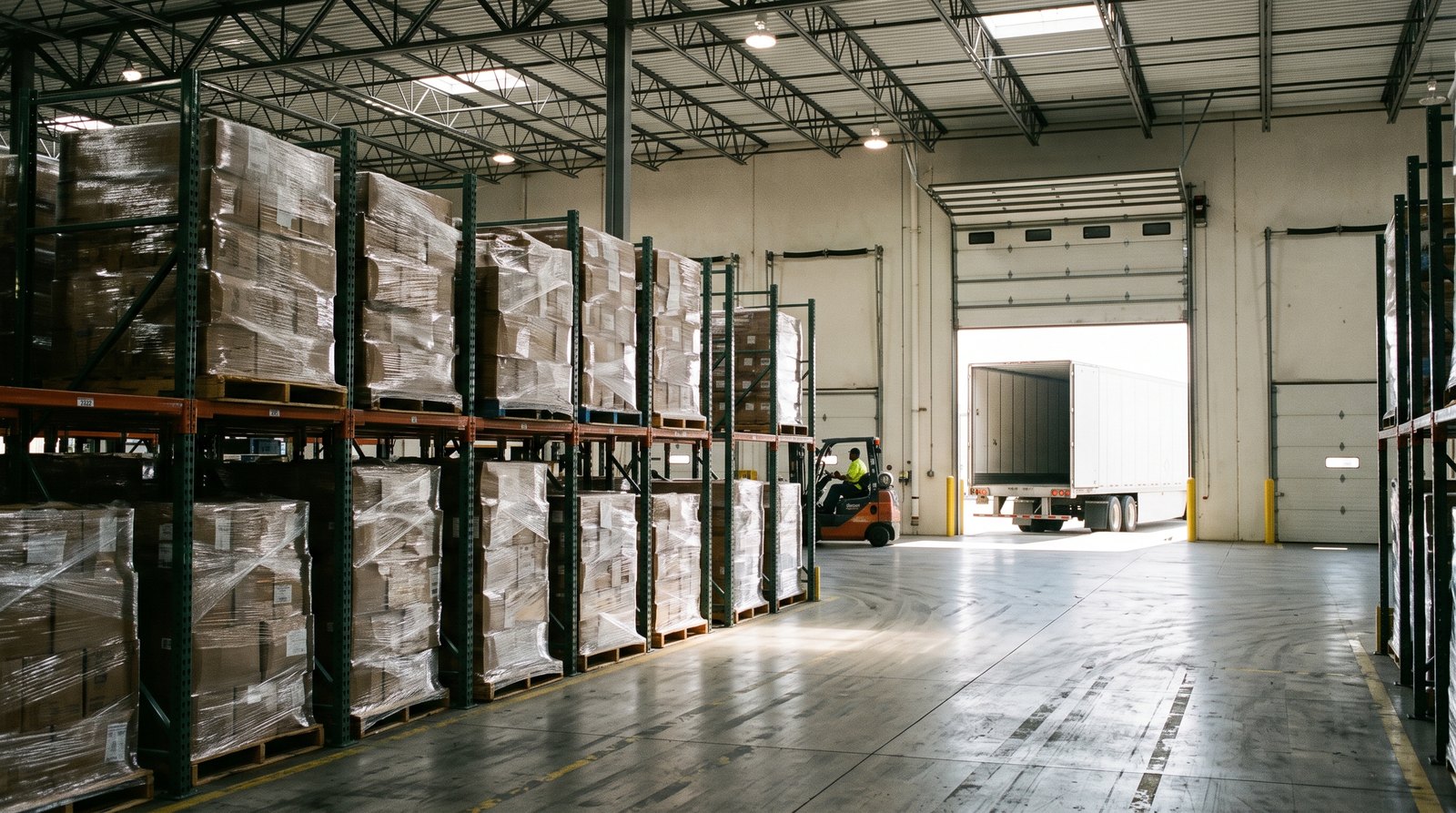
Leaving freight on the trailer can feel like the simplest short-term answer when delivery timing breaks down. Sometimes it is. But in many Denver freight situations, pallet storage is the better operating choice because the real problem is not just where the freight sits. It is how long it needs to wait, how easily it needs to be accessed, and whether the next move is actually defined.
This guide is built for shippers, brokers, and carriers deciding between two short-term options: keep freight on the trailer or move it into pallet storage. The goal is not to turn every delay into a warehousing job. It is to make the cleaner decision before dwell, re-delivery risk, or scope confusion creates a bigger problem.
Denver Express’s warehousing page is already built around that kind of workflow. The site positions warehousing for inventory that moves in and out frequently, short-term staging when schedules change, and pallet storage that can flex weekly, monthly, or annually. For the Denver warehousing page, start here.
What is the real difference between pallet storage and leaving freight on the trailer?
The direct answer is that pallet storage moves the freight into a controlled warehouse workflow, while leaving freight on the trailer keeps the shipment tied to the equipment. Pallet storage is usually the better fit when timing is uncertain, access matters, or the load needs a cleaner handoff to the next move. Trailer hold is usually the better fit when the wait is very short, the next move is already clear, and the carrier or shipper is intentionally using trailer capacity as part of a planned drop or staging model.
| Decision factor | Pallet storage | Leave freight on trailer | Why it matters |
|---|---|---|---|
| Main purpose | Controlled short-term or ongoing hold in a warehouse | Keep freight with the trailer until the next move is ready | The choice changes whether freight is tied to equipment or placed into storage workflow |
| Best fit timing | Timing gap may last beyond a quick same-day or overnight hold | The delay is brief and the next move is already well defined | Uncertain timing usually makes pallet storage safer and easier to manage |
| Access to freight | Easier to inspect, stage, release, or combine with other warehouse services | Access is limited by trailer availability and unloading plan | If teams need visibility or multiple touches, trailer hold becomes less practical |
| Dependency on carrier equipment | Freight is separated from the trailer once unloaded | Freight stays dependent on keeping that trailer available | Trailer dependence is often the hidden issue in short delays |
| Best operational use case | Missed appointments, receiver delays, temporary holds, overflow pallets, redelivery planning | Drop-trailer workflows, short waits, known next move, predictable pickup | The better choice is usually revealed by the workflow, not the label |
| Scope flexibility | Can combine with rework, short staging, or later release | Works best when no extra handling is expected | Scope creep is what usually makes trailer hold stop being the clean answer |
A useful way to think about it is simple: pallet storage is usually better when the freight problem has become a timing-and-control issue. Leaving freight on the trailer is usually better when the wait is short and the plan is already settled.
When does pallet storage fit better than trailer hold?
Pallet storage usually fits better when the delay is no longer just a brief pause. If the receiver is not ready, the next appointment is still uncertain, the freight may need to be released in a controlled way, or the trailer needs to be freed up, the warehouse is often the cleaner operating choice.
That pattern shows up clearly in Denver Express’s own site. The warehousing page is positioned for inventory that moves in and out frequently, short-term staging between appointments, and support services under one roof if the load later needs cross-docking or rework. The homepage and services page also frame warehousing as the answer for frequent inventory cycles, short-term staging, and flexible pallet storage based on workflow rather than a one-size-fits-all storage model.
Short-term freight storage guidance in the live results reinforces the same point. When freight arrives before the destination is ready, temporary storage separates arrival from final delivery timing and helps reduce missed appointments, re-deliveries, and operational congestion. That is a much cleaner fit than leaving freight tied to a trailer when the delivery window is still uncertain.
When can leaving freight on the trailer still make sense?
Leaving freight on the trailer can still be the right answer when the delay is short, the next move is already defined, and the operation is intentionally using trailer capacity as part of the plan. That is most common in drop-trailer or trailer-pool environments where steady freight volume, yard space, and predictable pickup timing make trailer hold efficient rather than risky.
Live drop-trailer guidance is consistent on this point. Drop trailer programs work best for businesses with consistent freight volume, enough yard space, and a real need to decouple loading or unloading from driver wait time. They help reduce detention and dwell, but they also require coordination, equipment availability, and physical room to stage trailers safely.
That matters because “leave it on the trailer” is not automatically the same as a strong drop-trailer strategy. A true trailer-hold solution is planned. A weak one is what happens when no one is ready to decide whether the freight should move into storage.
What should you check before choosing pallet storage or trailer hold?
The fastest way to choose correctly is to look at the operating facts, not just the delay. Most wrong turns happen when teams focus only on cost or urgency and skip the practical question of what the freight needs over the next one to three days.
Use this checklist before you decide:
- How long is the freight likely to wait: a few hours, overnight, or multiple days?
- Is the next appointment or outbound move already confirmed?
- Does the freight need to be inspected, partially released, staged, or combined with another service?
- Is the trailer truly available for holding the freight, or does the carrier need the equipment back?
- Do you have the yard space and operating discipline for a drop-trailer style hold?
- Could the freight end up needing rework, cross-docking, or a later redelivery plan?
- Is the load stable, palletized, and easy to unload into storage if needed?
- Will keeping the freight on the trailer create visibility or coordination problems if the timeline slips again?
If the shipment may need storage plus another service, start with the service overview here.

What does this look like in real freight situations?
The difference between the two choices becomes clearer when you look at the next move, not just the current delay. Two loads can both miss delivery, but only one may belong on a trailer hold plan.
Scenario 1: Missed appointment with uncertain reschedule timing
A carrier misses a receiver appointment late in the afternoon. The freight is stable and palletized, but the receiver cannot confirm a new appointment until tomorrow and may push delivery out several days.
That is usually a pallet-storage situation. The problem is no longer a short wait. The freight now needs a controlled hold that is not dependent on keeping the same trailer tied up while the schedule stays uncertain.
Scenario 2: Planned drop-trailer handoff with known pickup timing
A shipper runs a steady lane and intentionally uses a drop-trailer setup. The trailer is left in the yard overnight, the warehouse has space to manage it, and the pickup is already planned for the next morning.
That can be a good trailer-hold situation. The trailer is part of a defined operating model, and the freight does not need warehouse access, corrective handling, or a longer timing buffer.
What mistakes and red flags lead teams to choose the wrong option?
The biggest mistake is treating all delays like they are the same length and the same kind of problem. A short wait with a confirmed pickup is one thing. A load with an uncertain redelivery plan, limited trailer availability, or a possible need for extra handling is something else.
Common mistakes and red flags include:
- Leaving freight on the trailer even though the new appointment is still unknown
- Treating an unplanned trailer hold like a true drop-trailer program
- Ignoring whether the carrier needs the trailer back for the next move
- Assuming trailer hold is simpler when the freight may need inspection, staging, or rework
- Forgetting that repeated timing slips can turn a short hold into a multi-day problem
- Choosing trailer hold when yard space, trailer visibility, or coordination is already weak
- Moving freight into storage too early when the next move is already confirmed and the wait is genuinely brief
A practical rule helps here: if the delay gets more manageable when the freight is separated from the trailer, pallet storage is usually the better fit. If the delay stays clean and predictable while the freight remains on equipment, trailer hold may still work.
What is the best next step if you are between the two?
If you are between pallet storage and trailer hold, describe the timing, trailer constraints, and next-move certainty before choosing the service label. That makes it much easier to decide whether the warehouse should own the problem or whether the trailer is still the right place for the load to sit.
Denver Express’s warehousing page already asks for the inputs that make that decision clearer: product type, pallet counts and weights, how long storage is needed, how often freight will move in and out, inbound ETA, and outbound timing if known. The site also makes it clear that cross-docking is the better fit if the freight does not need storage at all.
If pallet storage is likely the right answer, start here, Warehousing.
If the shipment may need storage, cross-docking, or rework together, start here- Services.
External references
More in Warehousing & storage
Keep reading in this cluster
Seasonal Overflow Storage in Denver: How to Plan Peak-Season Warehouse Space
Seasonal overflow storage gives you extra pallet space for a defined window instead of a full-year lease. Here is how Denver shippers size, price, and schedule peak-season warehouse space without paying for capacity they never use.
Temporary Freight Storage in Denver After a Rejected Delivery: What Happens Next?
A rejected delivery does not always turn into a rework job, and it does not always mean the freight should stay on the trailer. Sometimes the next best move is temporary freight storage while the ship...

Food-Grade Warehousing in Denver: What Shippers Actually Need to Qualify
Food-grade warehousing is not a single certification. It is a set of operational practices. Learn what Denver Express requires for ambient dry storage of packaged food products.
Short-Term vs Ongoing Warehouse Storage in Denver: Which Setup Fits Your Freight?
Compare short-term vs ongoing warehouse storage in Denver. Learn which setup fits your freight based on duration, movement cadence, access, and operational needs.