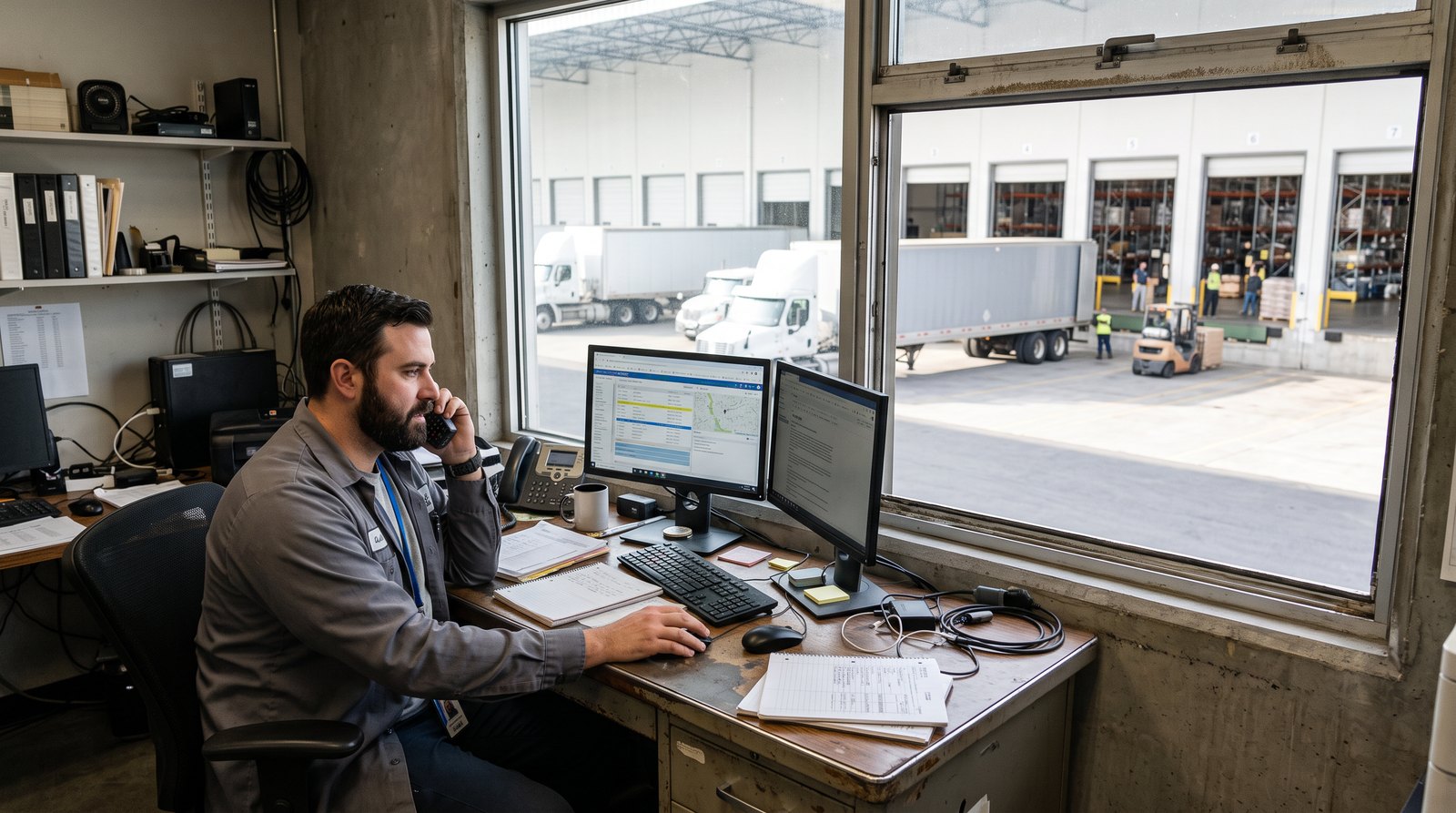
A cross-dock slot is a scheduled window for your load to arrive, be unloaded, and move through the dock with the right labor, door availability, and handling plan. In Denver, booking one quickly is usually less about saying the words “urgent load” and more about sending the operational details that let the facility decide whether the move fits today, this afternoon, or a different window. This guide explains what a cross-dock slot really means and what information helps confirm one fast.
What is a cross-dock slot, really?
The direct answer is that a cross-dock slot is a dock appointment tied to a specific freight move. It is not just a place in line. It is a time window the facility can actually support based on receiving hours, dock capacity, labor, equipment, and what your shipment needs once it arrives.
That matters because cross-docking is built around speed and minimal dwell. If the slot is booked without enough detail, the load may still arrive, but the team may not be able to handle it in the way you expected. A simple pallet transfer, a container unload, and a flatbed side-unload do not consume the dock in the same way.
Denver Express’s cross-docking page reflects that same operational reality. The facility handles container unloading, flatbed transloading, short staging when capacity allows, and rework support when freight arrives shifted or rejected. It also runs scheduled receiving Monday through Friday with a 3:30 p.m. cutoff, plus after-hours or weekend appointments by request.
What information helps book a cross-dock slot fast?
The fastest bookings usually happen when the request answers the facility’s first operational questions before anyone has to ask them back. A slot can be confirmed faster when the team knows what is arriving, how it will be unloaded, and whether the move is transfer-only or likely to expand into staging or rework.
| Detail to send | Why the dock team needs it | What a good answer looks like | What slows the booking down |
|---|---|---|---|
| Inbound ETA and desired unload window | The dock team must know when the load can realistically arrive | You give a usable arrival range and a preferred unload window | ETA is vague, sliding, or not aligned to the receiving schedule |
| Trailer type | Different equipment changes dock setup and handling | You clearly state container, dry van, reefer, or flatbed | Trailer type is missing or the unload method is unclear |
| Pallet count and total weight | Capacity and labor planning depend on the real load profile | Counts and weights are close enough to plan against | The shipment size is only estimated loosely or not provided |
| Palletized vs. floor-loaded | The unload method changes time and labor | You confirm how the freight is loaded | No one knows whether the freight is palletized or floor-loaded |
| Transfer-only vs. staging or rework | The dock needs to know whether the move is simple or multi-step | You say whether the load is a straight transfer or needs more handling | The request says cross-dock but the freight may actually need staging or corrective work |
| Product type and special handling notes | Some freight needs clearer handling instructions | The commodity is described in plain language with any constraints | Product type is vague or special handling appears late |
This is where many urgent requests succeed or fail. The facility is not only booking time. It is reserving the right mix of door access, people, and handling assumptions for your load.
What should you send before you ask for availability?
The best slot-request checklist is short, practical, and built around the facts that affect fit. You do not need a long narrative. You need the information that tells the dock team whether they can schedule the move and what kind of window makes sense.
Use this checklist before you request a slot:
- Inbound ETA and your preferred unload window
- Trailer type: container, dry van, reefer, or flatbed
- Whether side-unloading is needed for a flatbed
- Pallet count and total weight, if known
- Whether the freight is palletized or floor-loaded
- Product type in plain language
- Whether the job is transfer-only, needs short staging, or may require rework
- Any load-condition notes, such as shifted pallets, rejected freight, or special handling
- Supporting files if available, such as the BOL, photos, or rejection notes
Denver Express asks for these same kinds of inputs on its cross-docking page, including ETA, desired unload window, trailer type, pallet count, total weight, notes on special handling, and optional uploads. For urgent loads, the page also states that calling is fastest.
If the shipment may involve storage or corrective handling as well as a dock transfer, the broader routing page can help you choose the right owner of the problem first: Denver Express- Services.
How do you know whether your load is easy to slot or likely to need more back-and-forth?
The shortest answer is this: a load is easier to slot when the freight profile is clear and the workflow is narrow. A straight transfer with known ETA, known equipment, stable pallets, and a defined outbound plan is much easier to confirm quickly than a load with missing details or uncertain scope.
Cross-dock slot requests usually move faster when the inbound and outbound plan is already stable. They slow down when the shipment may actually involve multiple services, such as a container unload plus short staging, or a transfer request that becomes a rework job once photos reveal shifted pallets.
A helpful decision rule is to ask whether the dock team can picture the move in one pass. If the answer is yes, confirmation is usually faster. If the answer is no, expect clarification before scheduling.
What does fast slot booking look like in real freight situations?
The difference between a fast confirmation and a delayed one usually has less to do with urgency than with clarity. Two loads can both need help today, but only one may arrive with enough information to book a realistic slot quickly.
Scenario 1: Straight transfer with complete intake details
A broker has a dry van arriving at 11:30 a.m. with 20 standard pallets and a total weight already confirmed on the paperwork. The freight is stable, palletized, transfer-only, and the outbound plan is already arranged.
That is a strong fit for fast slot confirmation. The request gives the dock team what it needs to judge timing, labor, and handling without a long follow-up chain.
Scenario 2: “Urgent cross-dock” request with missing handling facts
A carrier says a container is arriving this afternoon and needs immediate unloading, but the request does not say whether the freight is floor-loaded or palletized, does not include weight, and does not mention that the receiver previously rejected part of the load.
That is the kind of request that usually creates delay. The urgency may be real, but the slot cannot be scoped properly until the unload method, load condition, and likely service path are clear.
What mistakes and red flags delay cross-dock slot confirmation?
The most common mistake is assuming the slot is only about time. In reality, the slot is also about handling assumptions. If those assumptions change after arrival, the dock plan may no longer match the job.
Common mistakes and red flags include:
- Saying “need a dock now” without a usable ETA or unload window
- Leaving out trailer type or not mentioning side-unload needs for a flatbed
- Giving pallet count but not total weight when weight affects handling
- Not clarifying whether freight is palletized or floor-loaded
- Calling the job transfer-only when the shipment may need staging or rework
- Waiting to share photos or rejection notes until after the slot request is made
- Assuming a same-day request will fit normal receiving hours without checking the cutoff
One reliable red flag is a request that sounds simple until the second email. If the details that define the move only appear later, the slot usually takes longer to confirm.
What should you do next if the load is urgent?
If the load is urgent, the best next step is to send the core freight facts in one message and then call. That gives the team something concrete to evaluate before the conversation starts, which is much better than trying to explain the job from memory on the phone.
For Denver cross-docking and transloading requests, start here.
If you are not sure whether the job is transfer-only or may need storage or rework, start here instead, Denver Express-Services.
Air shipments add their own timing problems. See air freight recovery from DIA to Aurora for when a dock slot between the airport and the receiver makes sense.
Frequently asked questions
Is a cross-dock slot the same as a dock appointment?
In practice, yes. A cross-dock slot is the appointment window the facility uses to receive and process a specific transfer move. The term “slot” usually emphasizes that dock time and handling capacity are limited and have to be reserved around the load’s real needs.
Can you book a slot without exact weights or pallet counts?
Sometimes a facility can still start the conversation, but exact or close estimates help avoid mis-scoping the job. The more handling-sensitive the load is, the more important those details become.
What if my shipment may need short staging too?
That should be included in the request up front. A transfer-only slot and a move that may need short staging are not the same operational plan, even if both begin at the dock.
What if the freight is shifted or rejected?
That may push the job beyond a simple cross-dock slot and into rework support. Photos and rejection notes help the team confirm whether corrective handling is needed before the next outbound move.
External references
Dock appointment scheduling overview
Dock scheduling best practices
< Older Post
Newer Post >
More in Cross-docking & transloading
Keep reading in this cluster

Cross-Docking vs Transloading in Denver: Which One Do You Actually Need?
Confused about cross-docking vs transloading in Denver? Use this guide to choose the right workflow based on speed, equipment change, handling, and shipment fit.
How to Choose a Cross-Dock Partner in Denver: 12 Questions to Ask
Confirm dock capacity, who touches your freight, how exceptions are documented, and every accessorial before you compare price. Twelve questions that separate a real Denver cross-dock from a phone number.

LTL Consolidation in Denver: Combining Multiple Shipments Into One Outbound Load
LTL consolidation combines several small shipments into one outbound truckload at a Denver cross-dock, cutting per-shipment cost and handling touches. Here is when it pays off and how to set it up.
Intermodal Freight in Denver: When It Makes Sense vs Standard Trucking
Intermodal freight in Denver works well on long-haul lanes, but the transload step often determines whether the move stays on schedule. Learn when rail-plus-truck makes sense and what to plan at the cross-dock.