
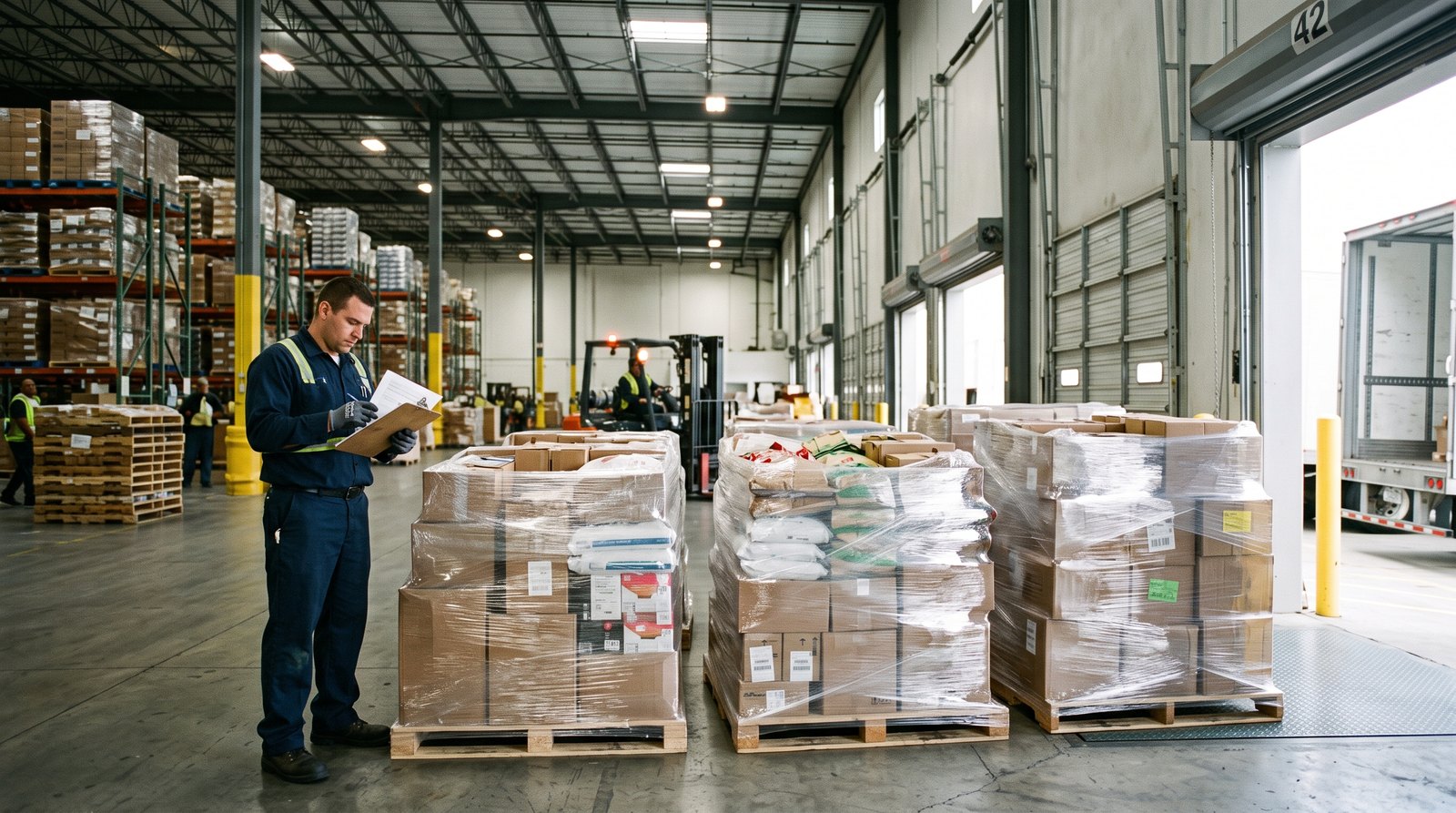
Booking the truck is often the moment teams assume the problem is already solved. In reality, the second delivery attempt fails when the redelivery plan is booked before the load, paperwork, appointment details, and receiver expectations are fully aligned. This guide explains what should be confirmed before booking redelivery after cross-docking or freight rework in Denver.
What has to be confirmed before redelivery is booked?
The short answer is that you need to confirm four things before the truck is booked: the load is actually delivery-ready, the receiver will accept it under the updated conditions, the shipment details match the new plan, and the outbound move fits the timing window. When any one of those is unclear, the second attempt can fail for the same reason as the first.
Guidance on handling rejected freight from sources like Worldwide Express and Accurate Logistics shows a consistent pattern: teams must first confirm the reason for rejection, document what changed (such as damage, load shift, or paperwork issues), and ensure the next destination and instructions are clearly defined before moving the freight again.
Denver Express’s own pages support the same logic. The cross-docking page says the team can help prepare freight for re-delivery, offers short staging when needed, and asks customers to confirm ETA, trailer type, pallet counts and weights, and whether the job is straight transfer, staging, or rework. The rework and contact pages add the other half of the picture: what happened, what outcome is needed, delivery requirements, appointment timing, and any photos or rejection notes that affect the next move.
| What to confirm before booking | Why it matters | After cross-docking | After rework |
|---|---|---|---|
| Receiver acceptance conditions | The second attempt fails if the receiver is not expecting the revised delivery setup | Confirm the new appointment, dock window, and any unload instructions | Confirm the receiver will accept the corrected load condition and any revised pallet configuration |
| Load readiness | Booking too early creates a truck plan for freight that is not actually ready to move | Confirm transfer, sort, or staging is complete and the outbound plan is set | Confirm rewrap, repalletizing, weighing, or other corrective work is finished |
| Shipment details and paperwork | The handoff breaks when references, counts, or instructions do not match the outbound move | Confirm BOL references, pallet counts, ship-to details, and carrier info for the new leg | Confirm any updated counts, pallet types, notes, or supporting photos tied to the corrected load |
| Timing and carrier plan | The truck needs a realistic pickup and delivery sequence, not just a target date | Confirm pickup window, dwell expectations, and whether delivery is direct or staged | Confirm when the freight will actually be ready, whether a hold is needed, and whether same-day delivery is realistic |
| Special handling requirements | Redelivery can fail if the next move ignores the original problem | Confirm any transfer-specific handling notes, trailer type, or dock requirements | Confirm any receiver-required corrections, weight verification, or handling notes are satisfied |
| Responsibility for next-step communication | Redelivery fails when one party assumes someone else confirmed the final details | Confirm who is updating the carrier and receiver on the revised delivery plan | Confirm who owns the receiver sign-off that the corrected freight is acceptable for redelivery |
A practical way to think about it is simple. Cross-docking redelivery is usually a timing-and-coordination problem. Rework redelivery is usually a timing-and-acceptance problem. Both need carrier details, but rework usually adds another layer of receiver confirmation.
How does the checklist change after cross-docking versus after rework?
After cross-docking, the main question is whether the freight is staged correctly for the new outbound move. The load may already be intact, but the second attempt still depends on having the right carrier, appointment window, trailer type, paperwork, and final destination details lined up.
After rework, the key question is whether the freight is now acceptable in the receiver’s eyes. That often means confirming more than timing. It may include pallet condition, rewrap quality, pallet type, weight verification, relabeling, or written instructions that came out of the rejection.
Denver Express’s own service split matches that distinction. The services page says cross-docking is for freight that needs to move quickly with minimal dwell, while freight rework is used when a load is unstable, shifted, or rejected and needs stabilization or rebuilding before the next leg.
If you’re unsure which service applies to your situation, begin with the services overview page, which is designed to route needs like warehousing, cross-docking, or rework based on shipment details and timing.
What should your redelivery packet include before the truck is booked?
The best redelivery packet is short, current, and built around what changed since the first failed attempt. It should help the carrier, warehouse, and receiver work from the same version of the plan.
Use this checklist before booking the truck:
- New delivery date or appointment window
- Final ship-to location and receiving contact
- Carrier name, trailer type, and pickup timing
- Current pallet count and total weight, if updated
- Whether the load is coming out of cross-dock staging, short storage, or completed rework
- BOL or outbound references that match the revised move
- Receiver-specific requirements for acceptance on the second attempt
- Photos or notes showing the corrected load if the first failure involved load condition
- Any rework details that matter for acceptance, such as repalletizing, rewrap, weighing, or pallet type
- Any special handling notes that still apply on the next leg
- Clear owner of communication for the final confirmation with the receiver and carrier
Denver Express’s contact page already asks for many of these same fast-response details: service needed, inbound ETA, desired outbound date, trailer type, pallet count and weight, product type, handling notes, any issues such as rejected freight or shifted pallets, and pickup or delivery requirements including appointments, time windows, and carrier info.
A next step is to use the Denver service pages to confirm which workflow owns the freight before the truck is dispatched:d
Denver Express cross-docking services.
Denver Express freight rework services.
What does this look like in real freight situations?
The redelivery checklist becomes much easier when you compare a timing-led second attempt with a condition-led second attempt. Both may need a truck, but the confirmation work is not the same.
Scenario 1: Redelivery after a missed appointment and short staging
A dry van misses its original receiver appointment, so the freight is unloaded into short staging through a cross-dock. The pallets were never unstable, and no corrective work was needed. The warehouse now has a new appointment for the next morning.
Before the truck is booked, the team should confirm the new dock window, pickup time, trailer type, pallet count, BOL references, and whether the receiver needs any updated instructions for the second attempt. The main risk here is coordination failure, not freight condition.
Scenario 2: Redelivery after rework on a rejected load
A receiver refused a load because several pallets were leaning and one pallet base failed. The warehouse repalletized the unstable freight, rewrote the pallet count, and sent updated photos after the rework was completed.
Before the truck is booked, the team should confirm that the receiver will accept the corrected pallet configuration, whether any weight verification or pallet-type requirement still applies, and whether the final paperwork matches the corrected load. The main risk here is not just timing. It is sending a corrected load back out without confirming that the correction meets the receiver’s standard.
What mistakes and red flags cause second delivery attempts to fail?
The most common mistake is assuming that the truck booking itself is the confirmation step. It is not. The truck should be booked after the critical details are confirmed, not instead of confirming them.
Common mistakes and red flags include:
- Booking the truck before the receiver confirms the second appointment or acceptance conditions
- Using the original paperwork even though pallet counts, pallet type, or load condition changed
- Treating post-rework redelivery like a standard reappointment without confirming what correction was required
- Leaving carrier pickup time vague while the freight is still being staged or finished
- Failing to assign one person to own the final receiver and carrier communication
- Sending the load back out without updated photos or notes when the first rejection was condition-based
- Assuming same-day redelivery is realistic without checking readiness, cutoff times, and the receiver window
A useful rule is this: do not book redelivery on hope. Book it on confirmed readiness.

What is the best next step if the truck is about to be booked?
If the truck is about to be booked, pause long enough to confirm the redelivery packet is current and that the receiver, warehouse, and carrier are working from the same plan. That short confirmation step is usually cheaper than a failed second attempt.
Denver cross-docking
Denver freight rework
If the load may involve staging, storage, or more than one service.
External references
More in Checklists & documentation
Keep reading in this cluster

What to Send in a Same-Day Freight Help Request So the Right Team Can Respond Fast
Urgent freight requests get faster responses when the first message includes the right details. Use this checklist for same-day cross-docking, rework, and storage requests in Denver.

OS&D Documentation Checklist: What to Record for Overage, Shortage, or Damage
Learn what to document for OS&D (overage, shortage, damage) to protect recovery options and reduce losses.

Bill of Lading Checklist for Cross-Dock Freight in Denver: What to Check Before the Trailer Leaves
What to confirm on the inbound BOL, the delivery receipt, and the outbound BOL when freight moves through a Denver cross-dock: counts, seals, PO references, exceptions, photos, and signatures.

Short-Term Warehouse Storage in Denver: What to Confirm Before Same-Week Intake
Need short-term warehouse storage in Denver this week? Use this guide to confirm product fit, pallet profile, timing, and intake details before requesting space.