
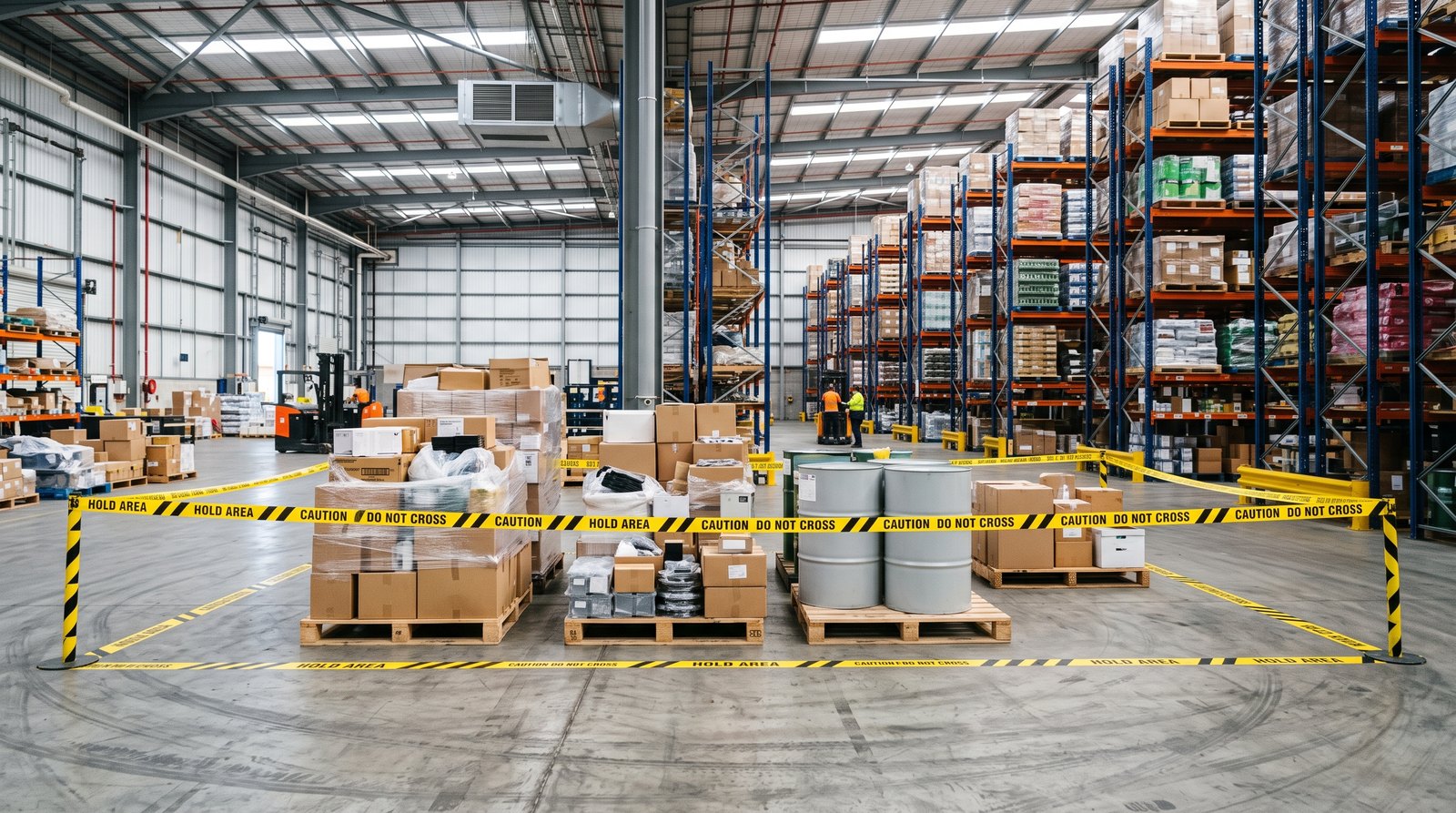
A rejected delivery does not always turn into a rework job, and it does not always mean the freight should stay on the trailer. Sometimes the next best move is temporary freight storage while the shipper, broker, carrier, and receiver sort out the redelivery plan. This guide explains what usually happens next after a rejected delivery in Denver, when short-term storage is the right owner of the problem, and when storage should wait until rework or transfer decisions are made.
What usually happens after a rejected delivery?
The short answer is that the load needs a next-step owner quickly. After a rejection, teams usually need to decide whether the freight can go straight into temporary storage, whether it needs rework first, or whether it should be redirected through a cross-dock or another destination.
Guidance on handling rejected freight from sources like Worldwide Express and Accurate Logistics shows a consistent pattern: next steps depend on why the load was rejected, its condition, and whether it can be redelivered as-is or needs corrective handling such as rework, rescheduling, or temporary storage.
Denver Express’s own service pages line up with that same decision path. The warehousing page frames storage as a controlled hold for inventory and temporary staging, while the rework page says rework is used when freight cannot be accepted as-is because pallets shifted, wrap failed, or the load was rejected and needs to be prepared for redelivery.
| Situation after rejection | Best next-step owner | Why it usually fits | What to confirm first |
|---|---|---|---|
| Freight is stable, palletized, and just cannot be delivered today | Temporary storage | The main issue is timing, not freight condition | How long it must sit, ETA, pallet count, product type, and next delivery trigger |
| Freight is unstable, leaning, or partially collapsed | Rework first, then possible storage | The load may not be safe or acceptable to store as-is | Photos, affected pallets, pallet condition, and likely corrective work |
| Receiver rejected the load due to trailer type or handoff requirements | Cross-dock or transload, sometimes with short staging | The job is more about transfer than storage | Inbound equipment, outbound plan, and whether the freight is transfer-ready |
| Rejection happened because the appointment failed but freight is sound | Temporary storage or short staging | The load likely needs a controlled hold until redelivery is reset | New appointment timing, receiving window, and whether the freight needs frequent access |
| Only part of the load is affected | Mixed workflow: rework plus storage or transfer | The affected and unaffected freight may need different handling paths | Which pallets failed, whether partial acceptance happened, and what each portion needs next |
| The final destination is changing | Storage or redirect workflow | The freight may need a short hold while the new plan is confirmed | Who is directing the next move, where the freight should go, and whether the load can move as-is |
A useful rule is simple. If the freight can still be handled safely and delivered later without being rebuilt, temporary storage is often a clean next step. If the freight cannot move or be stored safely as loaded, storage usually should not be the first answer.
When is temporary freight storage the right next step?
Temporary storage is usually the right next step when the rejection created a timing problem rather than a freight-condition problem. The receiver may not be ready, the appointment may have been missed, or the delivery may need to be rescheduled for another day. In those cases, the load needs a controlled hold, not necessarily a rebuild.
Recent guidance on short-term freight storage during delivery delays from providers like Comet Delivery reinforces this pattern, noting that temporary storage helps separate arrival from final delivery timing so teams can reset the plan without forcing the shipment into the wrong next step.
That aligns with Denver Express’s warehousing positioning. The site describes flexible pallet storage, short-term staging when schedules change, and intake based on pallet counts, product type, and how often inventory moves in and out.
When should storage wait until rework happens first?
Storage should usually wait when the rejection exposed a freight-condition problem that makes the load unsafe, unstable, or not receiver-ready. If pallets are leaning, wrap has failed, a pallet base is broken, or the receiver specifically rejected the stack condition, the immediate issue is no longer “where should this sit?” It is “what has to be fixed before this can be stored or redelivered safely?”
Denver Express’s rework and service pages are explicit on that point. Freight rework is for loads that are unstable, shifted, or rejected and need stabilization or rebuilding before the next leg, commonly through rewrap, repalletizing, or weighing.
This is where teams often lose time. They ask for storage because the load cannot be delivered, but the storage request is not really ready until someone confirms whether the freight can be unloaded and held safely as loaded.
What information should you gather before requesting temporary storage?
The best storage request after a rejected delivery should answer two questions at once. First, is storage the right owner of the problem? Second, what does the warehouse need to know to decide whether same-day or next-day intake is realistic?
Use this checklist before you request temporary freight storage:
- Why was the load rejected in plain language
- Whether the freight is stable as loaded or may need rework first
- Pallet count, approximate weight, and whether only part of the load is affected
- Product type and any handling or food-grade requirements
- Trailer type and the load’s current location
- Inbound ETA to storage and the likely hold period
- What triggers release: a new appointment, redirect, return, or customer approval
- Photos and rejection notes if the condition of the load is part of the issue
- Whether the shipment may also need rework or cross-docking as part of the recovery plan
Denver Express’s contact and warehousing pages already ask for many of these exact facts, including service needed, ETA, trailer type, pallet count, weight, product type, special handling notes, and files such as BOL, load photos, or packing lists. The site also says calling is fastest for urgent same-day issues like rejected freight or shifted pallets.
If the fit is still unclear, the best place to start is the services overview page, which outlines core options like warehousing, cross-docking, and freight rework and helps match your situation to the right next step.
What does this look like in real freight situations?
The difference between a clean storage move and a delayed recovery usually comes down to whether the rejection was mainly about timing or mainly about load condition. Looking at real examples makes the choice easier.
Scenario 1: Rejected because the appointment failed, not because the freight failed
A driver reaches the receiver after the appointment window closes. The 20 pallets are stable, wrapped, and still ready for delivery, but the receiver will not unload until a new appointment is scheduled for two days later.
That is usually a temporary storage situation. The load does not need to be rebuilt. It needs a controlled hold until redelivery is ready.
Scenario 2: Rejected because the load shifted during transit
A receiver refuses four pallets because two are leaning, one pallet base is damaged, and the stack condition no longer meets receiving standards. The rest of the load may be fine, but the affected portion cannot simply be placed into storage without checking whether it needs restacking or repalletizing first.
That is usually a rework-led situation, even if storage becomes part of the plan afterward. The next step is to confirm what must be corrected before the freight can sit safely or move back out.

What mistakes and red flags cause problems after a rejected delivery?
The biggest mistake is treating every rejected delivery like a storage job. Rejection only tells you the original delivery failed. It does not tell you whether the freight itself is still ready for handling, storage, or redelivery.
Common mistakes and red flags include:
- Asking for temporary storage without explaining why the load was rejected
- Assuming stable freight and unstable freight follow the same next-step workflow
- Leaving out photos when the rejection involved pallet condition or packaging failure
- Not separating affected pallets from unaffected pallets when only part of the load failed
- Leaving the hold period open-ended with no release trigger
- Treating a transfer problem as storage when the real issue is equipment mismatch or rerouting
- Forgetting to mention requirements that could affect fit, such as food-grade needs or unsupported bonded storage
A practical rule helps here: storage is a timing solution. Rework is a condition solution. If you confuse the two, the next step usually slows down.
What is the best next step if your load was just rejected?
If the load was just rejected, gather the load facts, confirm whether the freight is stable, and route the job based on the real problem. If the shipment needs a controlled short hold, start with Denver warehousing. If it needs correction before redelivery, start with rework. If it may involve more than one service, use the selector page first.
Start with warehousing.
If the freight may need correction first, the appropriate next step is the freight rework services page, where loads can be stabilized, repalletized, and prepared for the next move.
If you need help choosing the right next step, start with the services overview page, which breaks down core options like warehousing, cross-docking, and freight rework to match your situation to the correct service.
External references
More in Warehousing & storage
Keep reading in this cluster
Seasonal Overflow Storage in Denver: How to Plan Peak-Season Warehouse Space
Seasonal overflow storage gives you extra pallet space for a defined window instead of a full-year lease. Here is how Denver shippers size, price, and schedule peak-season warehouse space without paying for capacity they never use.
Pallet Storage in Denver: When It Fits Better Than Leaving Freight on the Trailer
Leaving freight on the trailer can feel like the simplest short-term answer when delivery timing breaks down. Sometimes it is. But in many Denver freight situations, pallet storage is the better opera...
Food-Grade Warehousing in Denver: What Shippers Actually Need to Qualify
Food-grade warehousing is not a single certification. It is a set of operational practices. Learn what Denver Express requires for ambient dry storage of packaged food products.
Short-Term vs Ongoing Warehouse Storage in Denver: Which Setup Fits Your Freight?
Compare short-term vs ongoing warehouse storage in Denver. Learn which setup fits your freight based on duration, movement cadence, access, and operational needs.