
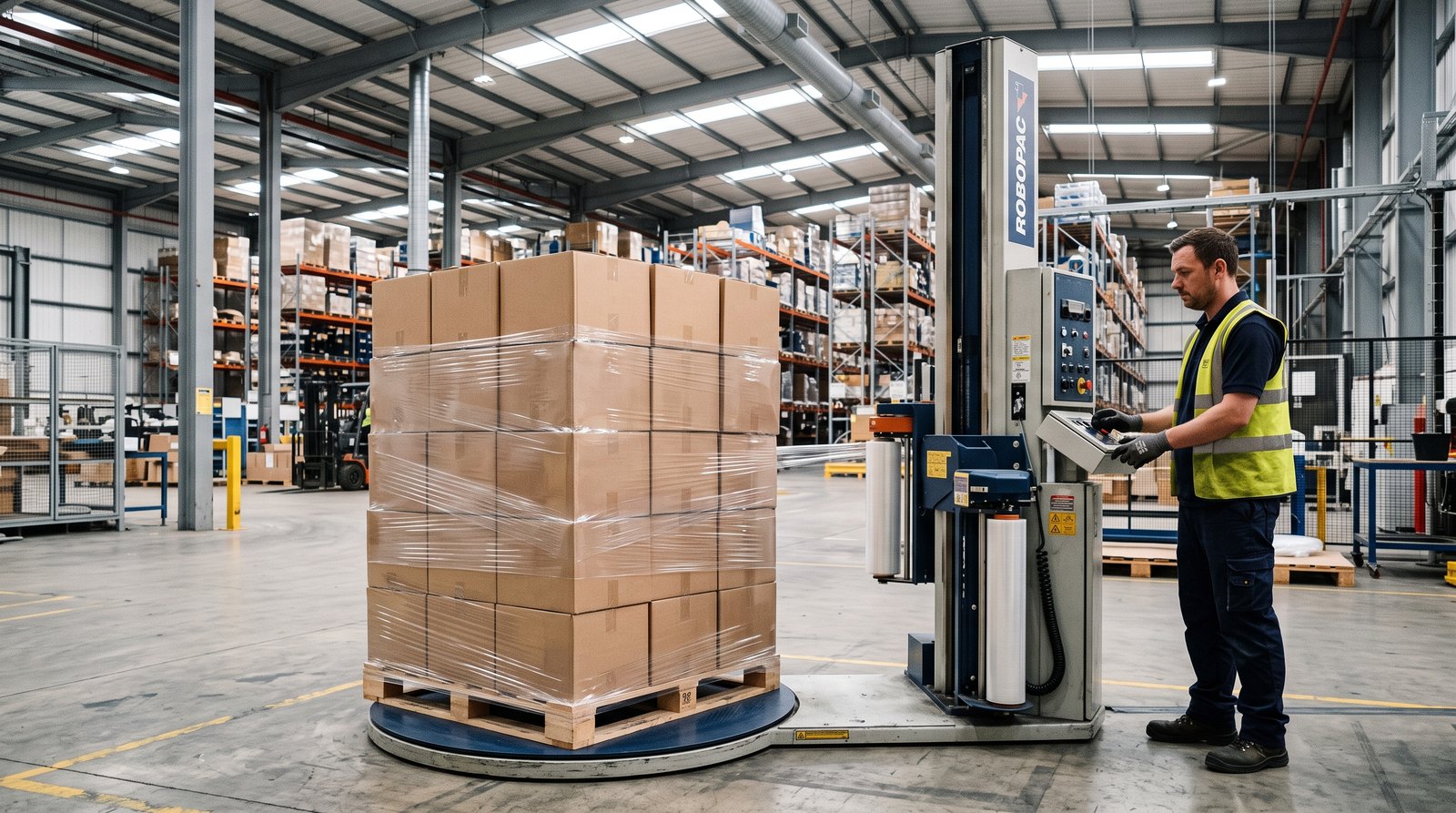
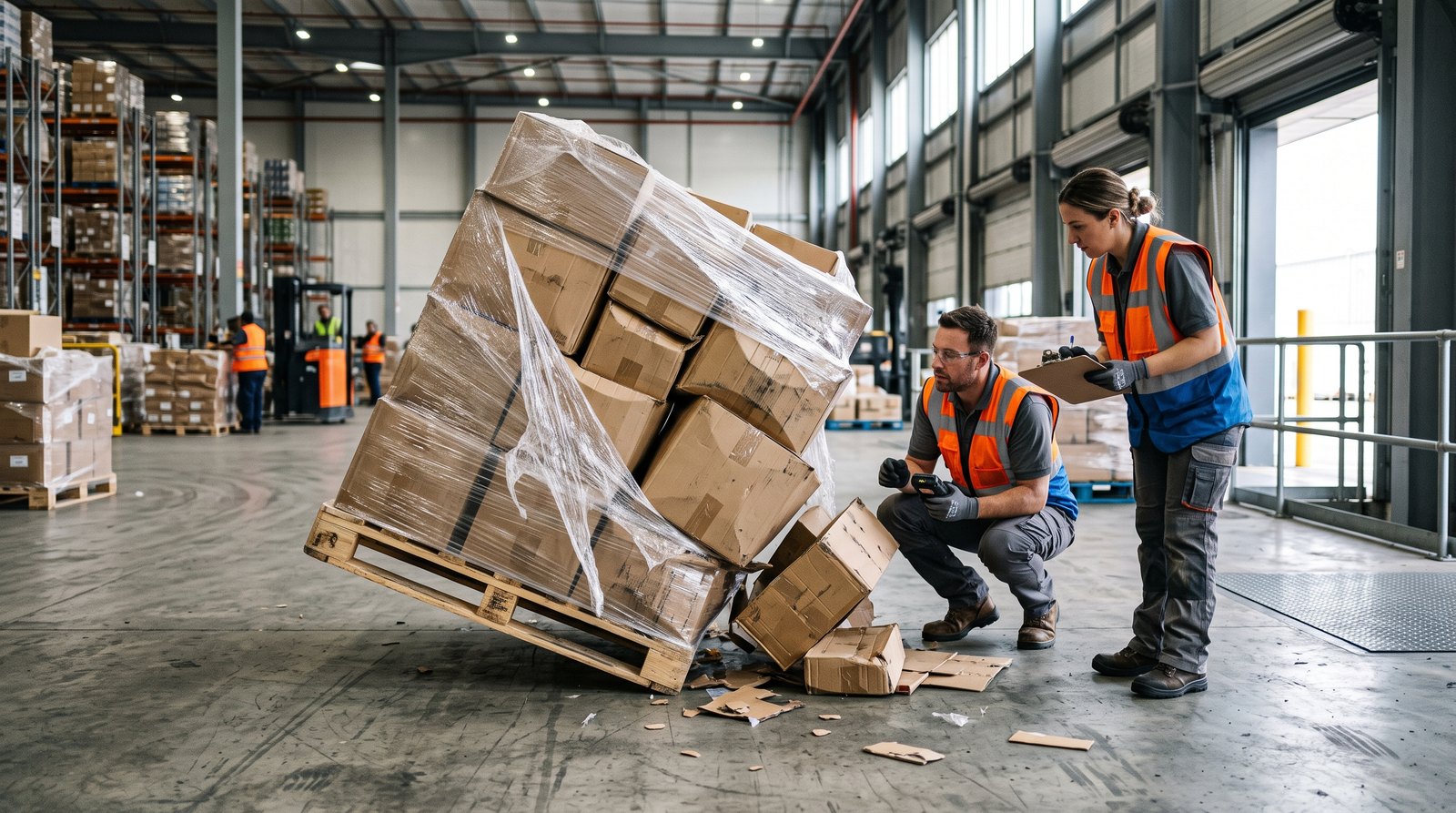
When freight shows up unstable - torn wrap, leaning stacks, broken pallets - the fastest question isn’t “How much will it cost?” It’s which fix actually makes the load deliverable. This guide helps you decide between rewrapping, restacking, and repalletizing without turning into a pricing sheet, so you can reduce delays and avoid paying twice for the wrong scope.
If you’re aligning your exception workflow with a consistent service path (cross-dock, short staging, rework, and redelivery support), start here. Services
When is a rewrap enough?
A rewrap is usually enough when the pallet is basically sound and the product is still stacked safely - but the containment (shrink/stretch wrap) is torn, loose, or insufficient for transit.
Rewrap tends to fit when:
- The pallet isn’t broken and the stack isn’t leaning dangerously
- The product isn’t crushed or spilling
- The load is stable once tightened (wrap, banding, corner protection)
- You’re addressing “containment” rather than rebuilding the load
If your team needs a baseline on how stretch wrap is commonly used to secure loads to the pallet, NMFTA’s palletizing guidance is a helpful reference.
When do you need repalletizing instead of rewrapping?
You need repalletizing when the pallet foundation or stack structure is compromised - meaning rewrap alone won’t make the freight safe, stable, or receiver-acceptable.
Repalletizing is typically needed when:
- A pallet is broken, soft, or unsafe to lift
- The stack has shifted so much that it must be broken down and rebuilt
- Product overhang/underhang or an uneven base is causing instability
- The receiver requires a specific pallet type or build standard
- Mixed freight must be rebuilt into destination-ready groups (not just “held together”)
Quick definitions (so teams use the same language):
- Rewrap: replace/strengthen the containment around a stable stack.
- Restack: rebuild the stack (often on the same pallet) to correct weight distribution or shape.
- Repalletize: move product to a new pallet (or new pallet configuration) and rebuild from scratch.
If the freight is unstable around dock equipment, OSHA’s loading dock guidance is a useful safety baseline for teams deciding whether to handle in-house or bring in experienced help.
What usually makes repalletizing cost more than rewrapping?
Repalletizing typically costs more because it increases touch count: product has to be handled, repositioned, and rebuilt - often with new pallets, additional materials, and sometimes verification.
The biggest cost drivers are:
- How much of the load is affected: one pallet corner vs multiple pallets collapsed
- Packaging type: cartons vs bags vs fragile items (more careful handling)
- Rebuild rules: height limits, SKU separation, pallet type requirements
- Verification: pallet count vs carton/SKU-level counting
- Outbound constraints: need to reload quickly vs can stage and rebuild carefully
Comparison table: rewrap vs restack vs repalletize
| Comparison point | Rewrap | Restack | Repalletize |
|---|---|---|---|
| What you’re paying for | Containment materials + time to secure | Labor to rebuild the stack pattern | Labor + new pallet(s) + rebuild from scratch |
| Best for | Wrap torn/loose, stack still sound | Leaning/uneven stack on a usable pallet | Broken pallet, major shift, required pallet change |
| Primary cost driver | Minutes + material | Touches to re-stack safely | Touches + pallet replacement + stricter rebuild rules |
| Time impact | Often fastest fix | Medium (depends on how much must be rebuilt) | Often longest (breakdown + rebuild + reload) |
| Outcome | Stable for transit if base is sound | Stable and better balanced | Stable + compliant with pallet/receiver specs |
How do you decide quickly at the dock? (a practical checklist)
Use this checklist to pick the right scope before approving work or dispatching a second truck.
- Is the pallet itself safe to lift? If boards are broken or the pallet flexes, lean toward repalletizing.
- Is the load leaning, bowed, or shifted off-center? If yes, you likely need restacking at minimum.
- Is there product overhang or gaps at the base? Overhang and voids often require rebuild, not just wrap.
- Is the receiver likely to refuse the load as-is? If yes, define the minimum compliant rebuild.
- Do you need destination-ready groups (split by stop/SKU)? That often pushes you toward repalletizing/sorting.
- Do you need verification (counts) for claims or inventory control? If yes, clarify whether verification is part of scope.
- Do you have an outbound deadline? Tight windows often require a clearly bounded scope to avoid open-ended labor.
If this is a recurring pattern (shifted loads, rejected deliveries, unstable pallets), having a defined rework path helps you resolve exceptions without improvising each time.
What does this look like in real life? (two mini-scenarios)
Scenario 1: Torn wrap, stable stack (rewrap wins)
A pallet arrives with torn stretch wrap and a few loose cartons near the top, but the pallet base is intact and the stack is square. Rewrapping with proper containment (and adding corner protection if needed) restores stability quickly, and the freight can be reloaded without breaking down the pallet.
Why this works: the structure was sound - only containment failed.
Scenario 2: Broken pallet + overhang (repalletize wins)
A pallet arrives with broken deck boards and product overhang. Even if you rewrap, the base can collapse when lifted or during transit. The correct fix is to move product to a safe pallet footprint and rebuild the stack to remove overhang and correct weight distribution.
Why this works: the foundation was compromised - rebuilding is the only reliable path.
Common mistakes and red flags (how teams end up paying twice)
The most expensive rework is rework you do twice - first a “quick fix,” then the real fix after a refusal.
Common mistakes:
- Approving a rewrap when the pallet is broken or the stack is structurally unstable
- Treating “restack” as minor without confirming rebuild rules (height limits, SKU separation)
- Ignoring overhang/underhang and base gaps (they predict repeat shifting)
- Skipping photos and scope notes, then disputing later with no shared evidence
- Letting “verification” creep into scope without defining what level is needed
Red flags that usually require repalletizing (or at least restacking):
- Leaning pallets that can’t be squared by tightening wrap
- Broken pallet boards, missing blocks, or visible flex when moved
- Mixed freight where destination separation is required
- Repeated refusals from the same receiver for pallet compliance
How do you prevent rewrap/repalletize events from happening again?
You can’t prevent every incident, but you can reduce recurrence by tightening pallet build fundamentals.
Prevention basics that often pay off:
- Build a tight base with no overhang and minimal gaps
- Keep heavy product low and balanced
- Use wrap that locks to the pallet (not just around the product)
- Add corner protection or banding when loads are tall, heavy, or “springy”
For teams that want a more technical stretch-wrap process reference, 3M’s packaging spec illustrates common wrapping and overlap concepts.
Frequently Asked Questions
Is restacking the same as repalletizing?
Not always. Restacking may rebuild the stack on the same pallet if it’s safe; repalletizing means moving product to a new pallet (or new pallet configuration) and rebuilding.
Can I rewrap a load that has a broken pallet?
You can, but it rarely solves the real problem. If the pallet foundation is unsafe, the load can still fail when lifted or during transit.
What should I send to get the right scope approved quickly?
A wide photo of the load, closeups of damage/shift/overhang, pallet type requirements, and your outbound timeline. Clear inputs prevent scope creep.
Next step
If you want a repeatable workflow for exceptions (rewrap, restack, repalletize, reload), align the plan to your service path here: Services
< Older Post
Newer Post >
More in Freight rework & recovery
Keep reading in this cluster
Cross-Dock, Short Storage, or Rework: Which Service Owns a Missed Delivery?
A missed delivery does not automatically mean storage or rework. The right Denver service depends on whether the problem is timing, hold length, or freight condition.
Load Restacking in Denver: When Restack Alone Is Enough vs Full Rework
Not every unstable load needs a full freight rework job. Sometimes the issue is limited enough that a careful restack is all it takes to make the freight safe, handleable, and ready for the next move....
Same-Day Freight Rework in Denver: What Can Usually Be Confirmed Up Front?
Need same-day freight rework in Denver? Learn what a facility can usually confirm up front, what details help fast triage, and what still depends on inspection and capacity.
Receiver Rejected the Load: What Information Helps a Rework Facility Triage It Fast?
Learn what to send when a receiver rejects a load so a Denver rework facility can triage it quickly. Includes a decision table, checklist, examples, and common mistakes.