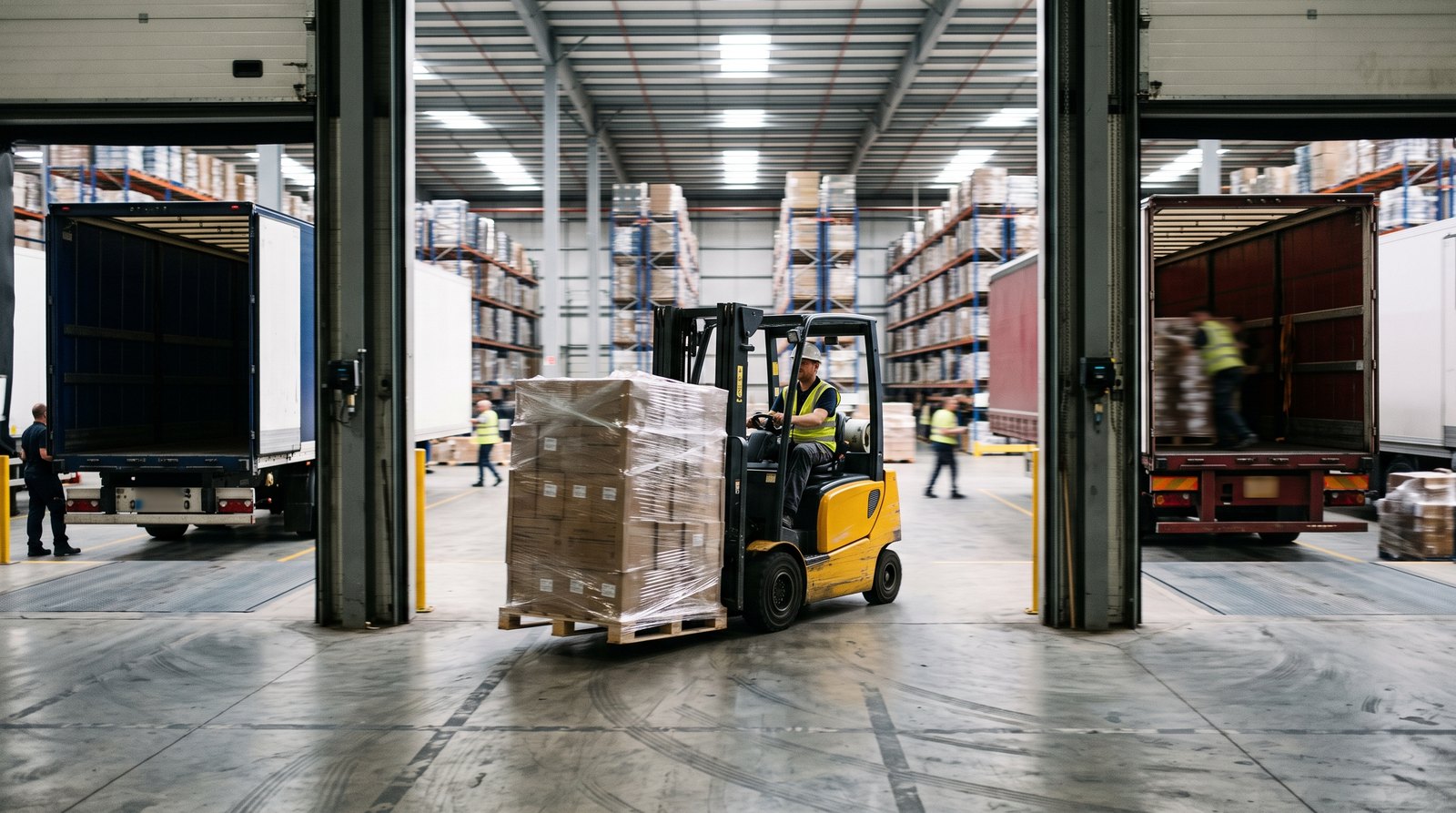
Most cross-dock facilities are built around one freight type: trailers backing to a dock door, cargo transferred through a dock leveler, pallets moved by forklift across the floor to an outbound door. That workflow is fast and efficient for boxed freight, but it doesn't work for flatbed loads. Flatbed freight arrives from the side, not the rear, and standard dock doors can't receive it. Denver Express operates a dedicated ramp for side-unloading flatbed loads at its facility near I-70 and I-270, which means flatbed freight can move through a Denver cross-dock without requiring a truck swap to a standard van trailer first. This post explains how that actually works, what the ramp handles, and what to confirm before requesting a flatbed cross-docking slot.
Why Flatbed Freight Needs a Different Dock Setup
A standard dock door is designed for enclosed trailers: a truck backs in, the dock leveler bridges the gap between trailer floor and dock floor, and forklifts move pallets straight across. The critical assumption is that freight is accessible from the rear of a trailer at dock height. Flatbed trailers break that assumption in two ways. First, freight is secured on an open deck and is only accessible from the sides or ends - you can't back a flatbed to a dock door and unload efficiently. Second, flatbed deck height often differs from a standard van, and the load configuration (strapped bundles, machinery, loose material) requires different access and handling.
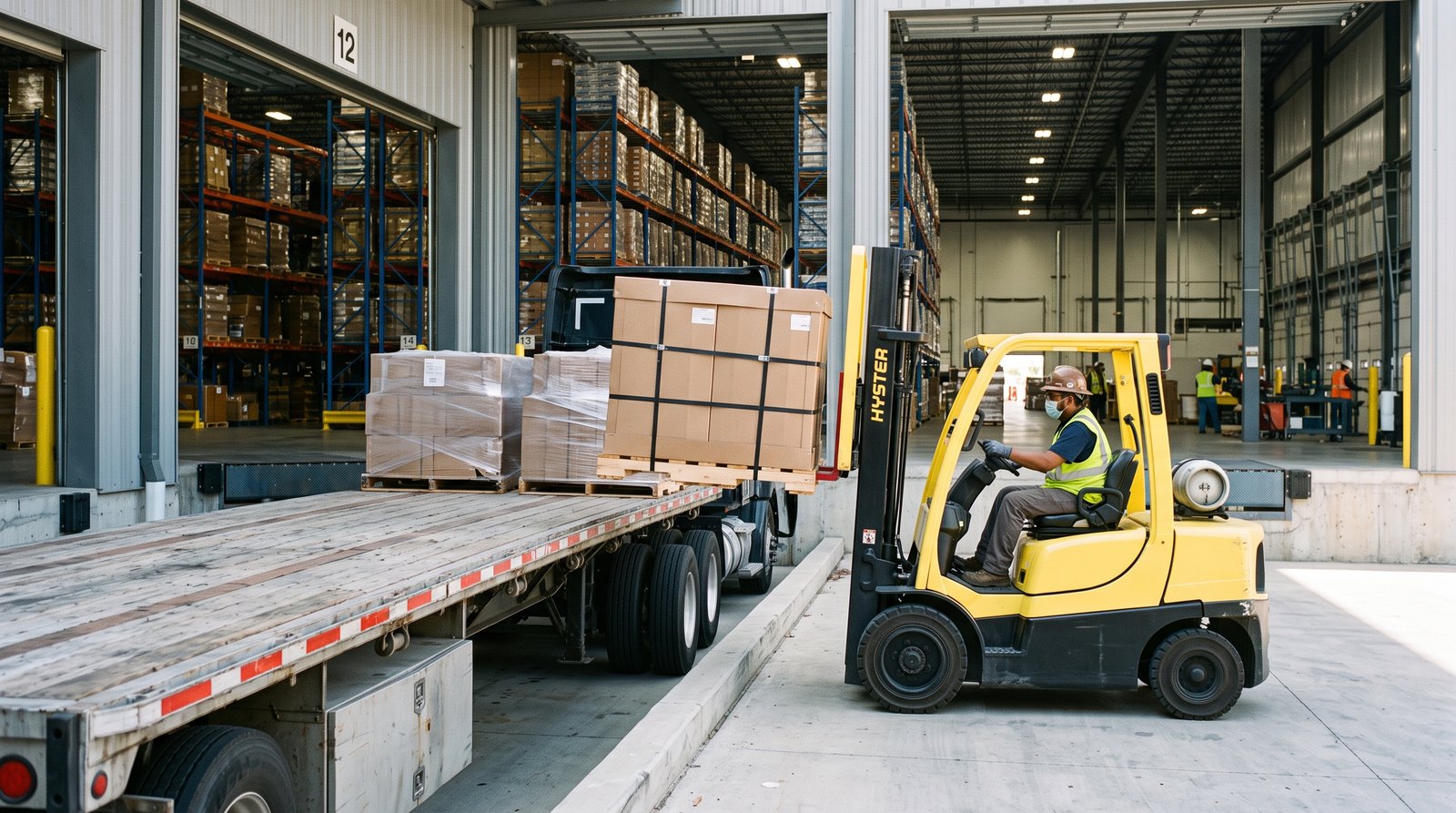
A side-unload ramp solves this by allowing a flatbed to pull alongside rather than backing into a dock door. Forklifts can then approach the load from the side, remove strapping, and transfer freight. At Denver Express, this ramp capability has been part of its transloading and cross-dock operations for years - it's a built-in part of how the facility handles mixed freight types, not a workaround.
What the Side-Unloading Ramp Actually Handles
Being direct about scope matters here. The Denver Express side-unload ramp is designed for standard flatbed trailers where the load is accessible from the side and can be lifted by standard forklift equipment. What it handles well: standard flatbed trailers (48 ft and 53 ft), step-deck trailers where the lower deck is accessible, palletized loads on flatbed, bundled or strapped freight that can be broken down and repalletized for outbound, and mixed flatbed loads being transferred to standard van trailers for final delivery.
What it does not handle: heavy equipment or oversized loads requiring lowboy trailers or cranes, hazardous materials requiring special handling permits, loads that cannot be moved by standard forklift equipment without specialized attachments, and refrigerated flatbed freight (no cold storage on-site). If your flatbed load involves specialized rigging, oversized dimensions, or out-of-gauge cargo, confirm the specifics before booking.
How Flatbed Cross-Dock Flow Differs from Container Unloading
Both flatbed and container freight end up at the same place - on pallets, ready for outbound - but they get there differently. Container freight arrives at a dock door backed to the dock. If floor-loaded, workers hand-stack product onto pallets inside the container and bring it out by forklift, which is labor-intensive and time-dependent on container size and product type. For more on what drives container unloading costs, that post covers the full breakdown.
Flatbed freight arrives at the side-unload ramp. The trailer pulls alongside, strapping is removed, and freight is lifted off the deck by forklift from the side. If the load is already palletized, it moves quickly - essentially a side-to-floor transfer. If it's bundled or loose, it may need freight rework (repalletizing, stretch wrapping) before it's outbound-ready. The key difference: container unloading typically involves more labor per unit because workers are inside a confined space. Flatbed unloading at a ramp is more forklift-driven and tends to move faster when the load is well-configured.
Flatbed vs Container at a Cross-Dock: A Quick Comparison
Container freight comes in from the rear at a dock door, is often floor-loaded, relies on forklift plus manual labor, and is best suited for import containers and boxed goods. Flatbed freight comes in from the side at a ramp, arrives strapped in bundles or palletized, is primarily forklift-driven, and is best suited for construction materials, equipment, and bundled loads. Both may need rework if they arrive non-palletized, and both move quickly once freight is pre-palletized. The convergence point is the outbound: both result in palletized, transfer-ready freight staged for the next carrier.
What to Confirm Before Requesting a Flatbed Cross-Dock Slot
Flatbed cross-docking works best when both sides have the same information going in. Before you book a cross-dock slot, confirm the following: trailer type and dimensions (standard flatbed, step-deck, stretch flatbed, length and any overhang); load configuration (palletized, strapped in bundles, or loose, and whether pallet dimensions are standard 48x40); total weight and estimated weight per pallet or bundle; outbound requirement (does freight transfer to a van trailer, does it need wrapping, weighing, or repalletizing first); arrival window (flatbed scheduling often has tighter windows than van freight since the ramp isn't a dock queue); and any load-specific needs like fragile items, required orientation, or special handling.
For same-day cross-docking scenarios - where a flatbed arrives and freight needs to move to an outbound truck the same day - lead time and load detail are even more important. Same-day feasibility depends on capacity and load complexity, not just arrival time.
When Flatbed Freight Needs Rework Before Transfer
Not every flatbed load arrives outbound-ready. Common situations that require rework before freight can transfer or go into storage: strapped bundles that need to be broken down and palletized, loads with mixed product that need sorting, and freight with shifted or damaged wrapping that needs rewrapping before it's transfer-safe. Denver Express handles repalletizing, shrink wrapping, weighing, and restacking in-house, which means a flatbed load that needs work before it moves doesn't require a separate stop at another facility.
If you're not sure whether your load will need rework, describe the load configuration when you reach out. It's much easier to plan around at the booking stage than at the ramp. You can also review how cross-docking vs transloading in Denver compare if you're still deciding on the right approach for your freight move.
Denver Express's side-unload ramp is available for flatbed cross-docking at 5503 Havana St, Denver, CO 80238 - near I-70 and I-270. To check availability and confirm your load fits the workflow, contact Denver Express at 303-289-4343 or info@denverexpressco.com.
More in Cross-docking & transloading
Keep reading in this cluster
LTL Consolidation in Denver: Combining Multiple Shipments Into One Outbound Load
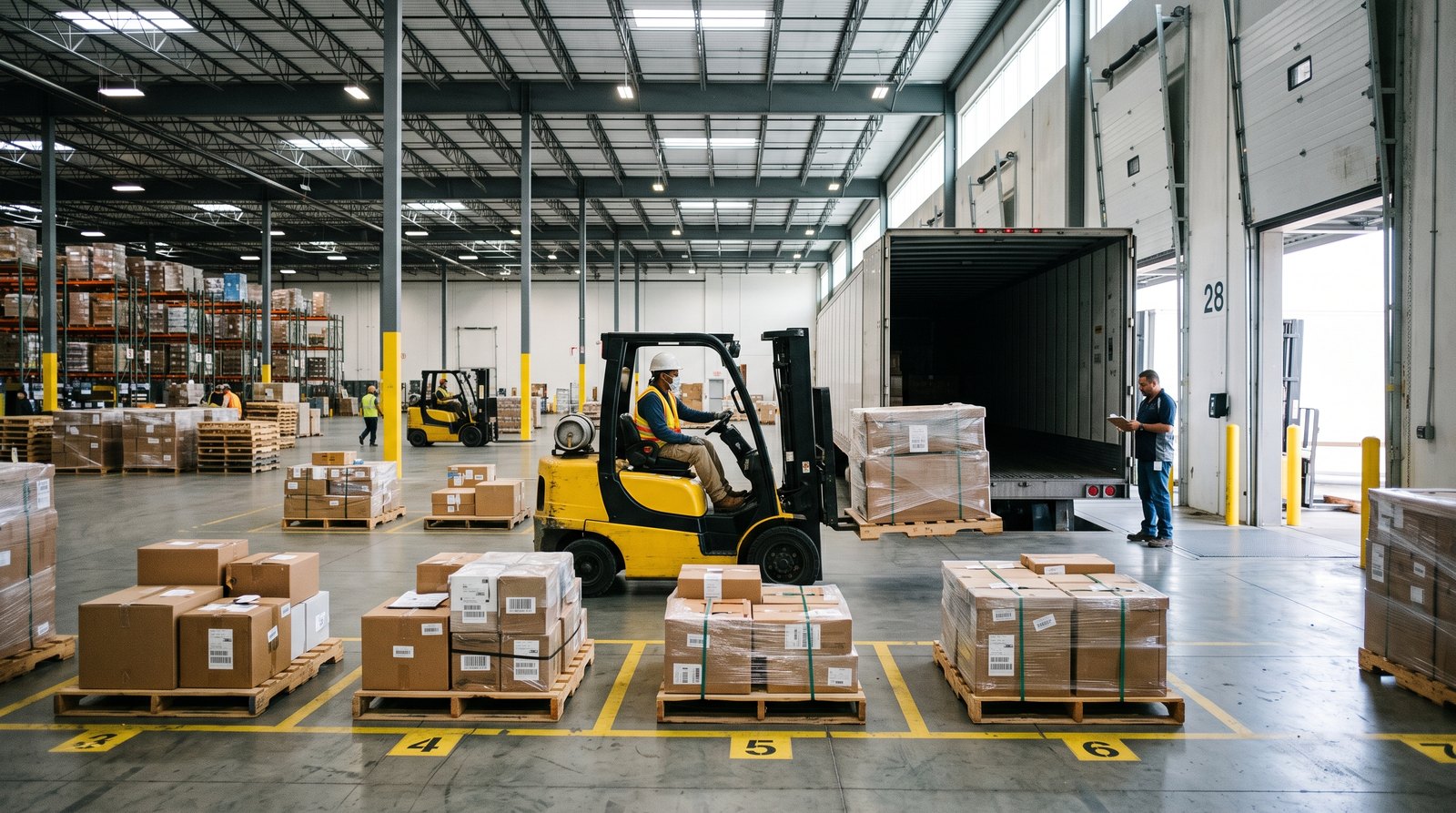
LTL consolidation combines several small shipments into one outbound truckload at a Denver cross-dock, cutting per-shipment cost and handling touches. Here is when it pays off and how to set it up.
Intermodal Freight in Denver: When It Makes Sense vs Standard Trucking
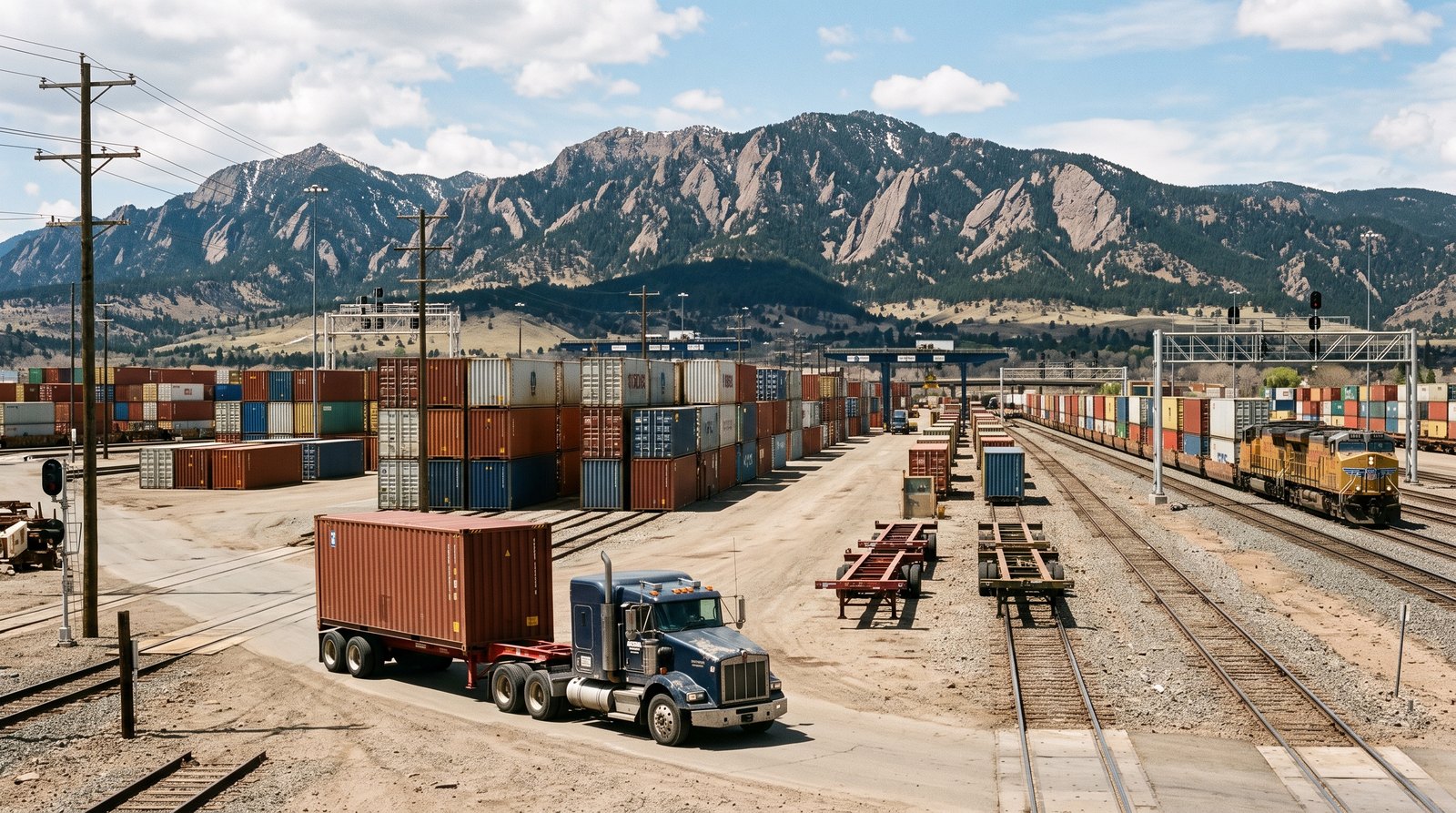
Intermodal freight in Denver works well on long-haul lanes, but the transload step often determines whether the move stays on schedule. Learn when rail-plus-truck makes sense and what to plan at the cross-dock.
Same-Day Cross-Docking in Denver: What Makes It Feasible and What Usually Breaks the Plan?
Same-day cross-docking sounds simple because the goal is simple: get freight in, move it across the dock, and send it back out without turning it into storage. The operational reality is tighter than ...
What Is a Cross-Dock Slot in Denver-and What Do You Need to Book One Fast?
Need a cross-dock slot in Denver fast? Learn what a dock slot really is, what details matter most, and what to send before you request availability.