Most Q4 retail chargebacks come from three things: missing the delivery appointment, incorrect labels, and pallets that break the retailer's rules. Confirm the appointment and the routing guide before freight ships, check labels and pallet build at a Denver cross-dock before final delivery, and leave buffer time so a small problem can be fixed instead of refused. A late or rejected holiday load costs far more than a check at the dock.
November is when retail receiving gets serious. Distribution centers and stores are taking their heaviest volume of the year, and their compliance teams enforce routing guides closely. A supplier that got away with a missing label in summer may get a chargeback for it now. This guide covers how to keep holiday store freight compliant as it moves through Denver. For rework when something is already wrong, see our post on retail vendor compliance rework.
What causes retail chargebacks in Q4?
A chargeback is a fee a retailer deducts from a supplier's invoice when a shipment breaks its rules. In Q4 the most common triggers are late or missed appointments, early arrivals the receiver will not take, incorrect or missing carton and pallet labels, the wrong pallet type or height, mixed SKUs on a pallet that should be single SKU, and missing or mismatched paperwork.
Each retailer publishes its own routing guide, and the rules differ. The safest assumption is that every detail in the guide will be checked in peak season.
How do you protect the delivery appointment?
Book the appointment as soon as the freight is ready, and plan the inbound so the freight reaches Denver with time to spare. A Denver cross-dock lets you separate the long-haul arrival from the store delivery. The long-haul truck drops on its own schedule, the freight is checked and staged, and a final delivery goes out to meet the exact appointment.
| Risk | What usually causes it | How staging in Denver helps |
|---|---|---|
| Late arrival | Weather or long-haul delays | Freight waits at the dock, not on the road |
| Early arrival refused | Truck arrives before the window | Freight is held and delivered on time |
| Label errors | Labels applied at origin incorrectly | Labels checked and fixed before delivery |
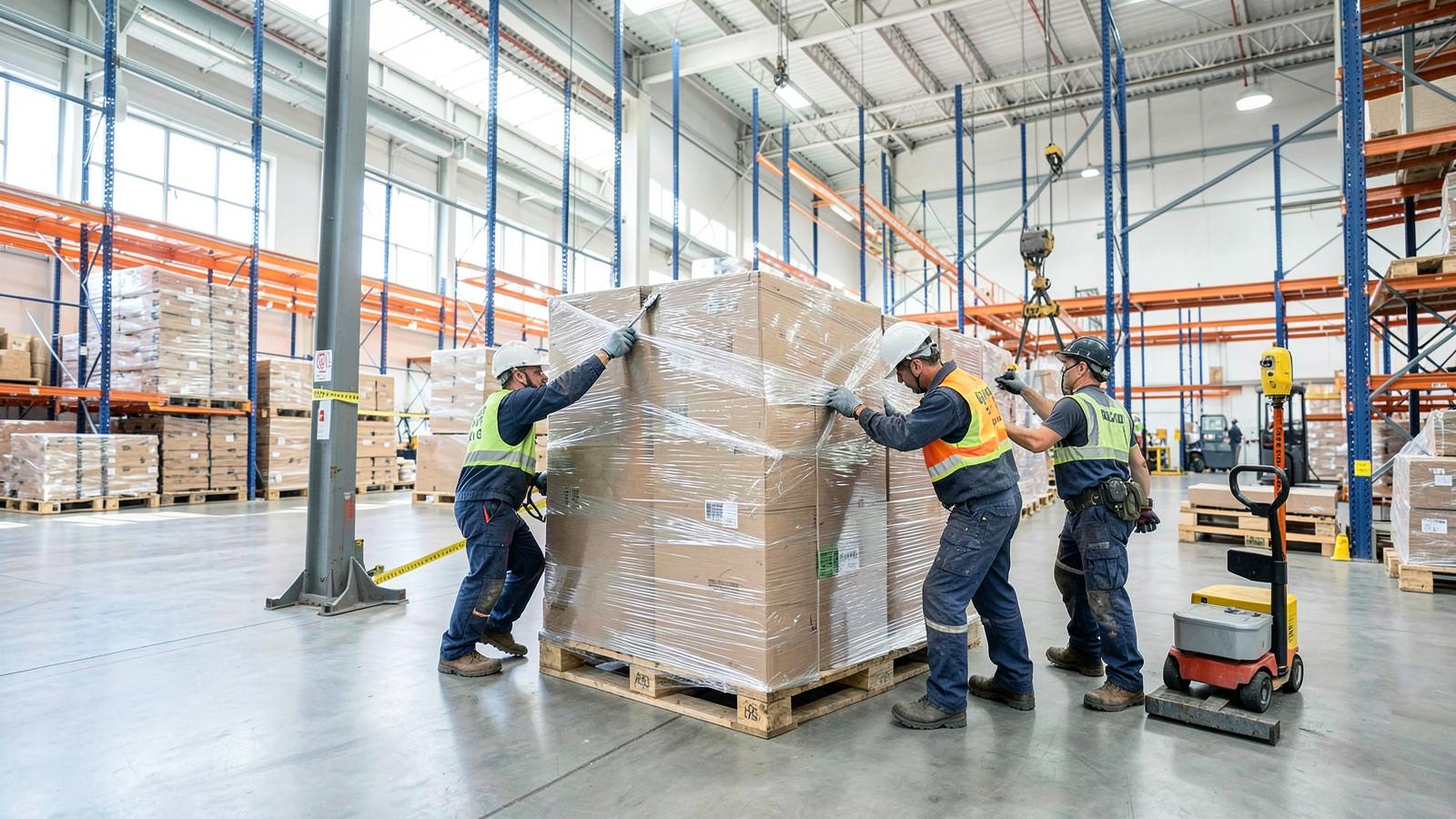
| Pallet height or type violation | Origin pallet build does not match the guide | Pallets rebuilt to the retailer's rules |
| Mixed pallets | Consolidated loads not sorted | Freight sorted by store or SKU at the dock |
What should you check before holiday freight reaches the store?
Use the retailer's routing guide as the checklist. At a minimum, confirm:
- Appointment date, time, and confirmation number
- Purchase order numbers on the paperwork and labels
- Carton labels and pallet labels in the required format and position
- Pallet type, height, and weight limits
- Single SKU or mixed pallet rules
- Bill of lading details that match the purchase order
Our BOL checklist covers the paperwork side. When a pallet needs to be rebuilt, our guide to rewrap versus repalletize explains which fix fits.
How much buffer time should you build in?
Enough to fix a problem without missing the appointment. For freight passing through Denver, that usually means arriving at the dock at least a business day before the store appointment, and more in peak weeks. Our dock receives Monday through Friday, 8:00am to 4:00pm, with a 3:30pm cutoff, so plan around that window or arrange after-hours receiving in advance.
What happens if a load is refused anyway?
Bring it back, find out exactly why, and fix that specific problem. Refusals are expensive, but they are recoverable when the freight returns to a dock that can assess it, correct labels or pallets, and stage it for a new appointment. Our post on rejected load triage walks through that process step by step.
Keep your holiday freight compliant
Denver Express provides cross-docking, staging, and freight rework from our Denver dock. Contact us with your retailer's routing guide and appointment details, and we will help you plan a clean delivery.
Frequently asked questions
What is a retail chargeback?
It is a fee a retailer deducts from a supplier's invoice when a shipment does not follow its routing guide, such as a late delivery or incorrect labels.
Can a cross-dock fix labels before delivery?
Yes. Labels can be checked and reapplied, and pallets can be rebuilt to the retailer's rules before the freight goes to the store.
Should holiday freight arrive early to be safe?
Arrive early at the dock, not at the store. Many receivers refuse early arrivals, so stage the freight and deliver on the appointment.
Do you deliver to the retail store or distribution center?
We do not operate trucks. Delivery is coordinated through our sister company or your carrier once the freight is checked and ready.
What should I send before compliance work?
Send the retailer's routing guide, the purchase orders, the appointment details, and photos of the current labels and pallets.
Is it worth checking every Q4 load?
For high-value retailers with strict guides, a quick check is far cheaper than a chargeback or a refused load in peak season.
More in Checklists & documentation
Keep reading in this cluster

What to Send in a Same-Day Freight Help Request So the Right Team Can Respond Fast
Urgent freight requests get faster responses when the first message includes the right details. Use this checklist for same-day cross-docking, rework, and storage requests in Denver.
Redelivery After Cross-Docking or Rework: What to Confirm Before the Truck Is Booked
Booking the truck is often the moment teams assume the problem is already solved. In reality, the second delivery attempt fails when the redelivery plan is booked before the load, paperwork, appointme...

Short-Term Warehouse Storage in Denver: What to Confirm Before Same-Week Intake
Need short-term warehouse storage in Denver this week? Use this guide to confirm product fit, pallet profile, timing, and intake details before requesting space.

Warehouse Quote Checklist: What to Send for an Accurate Storage & Handling Price
Get a faster, more accurate warehousing quote with a simple data pack: inventory profile, flow profile, and handling requirements.