
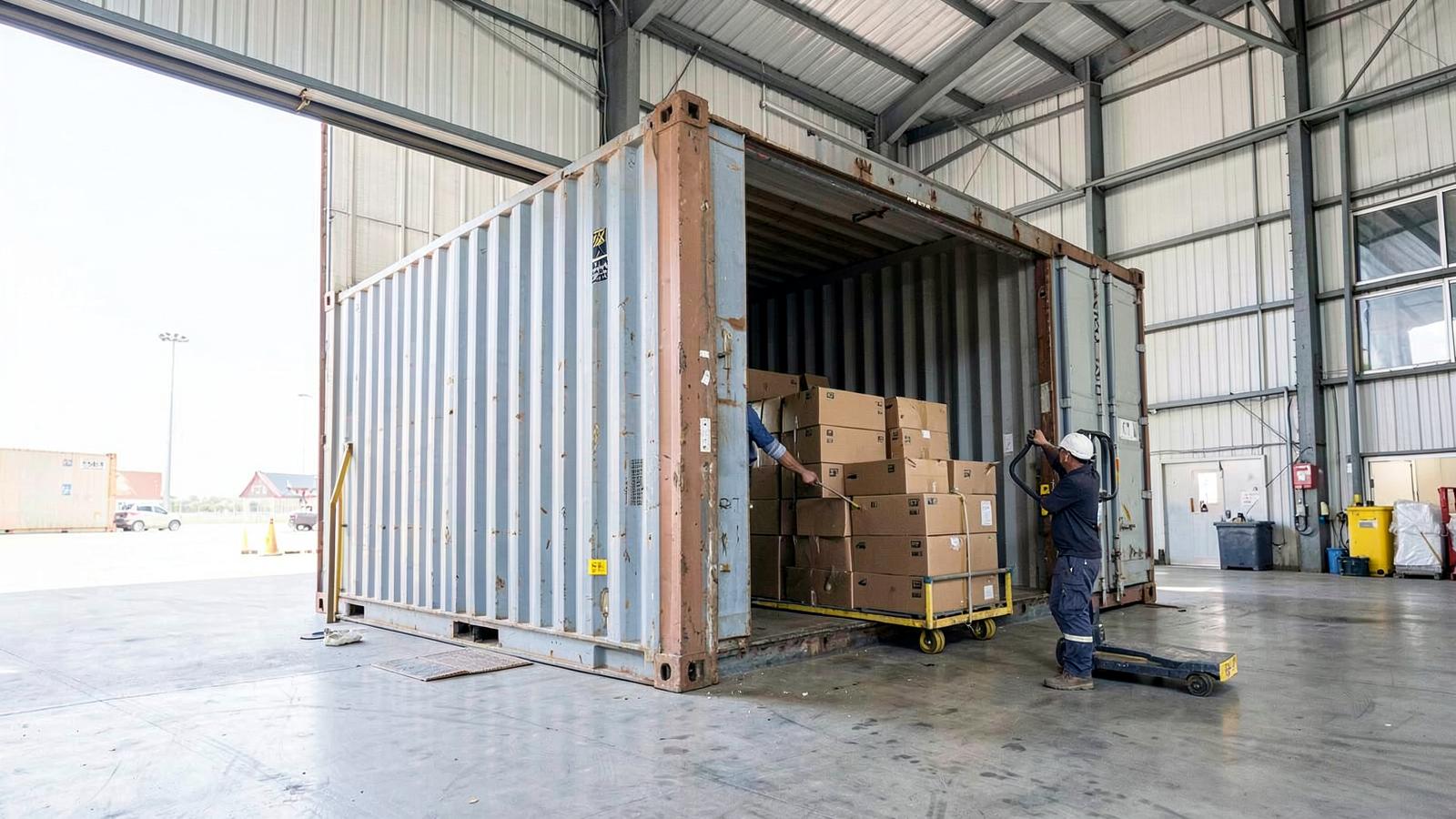
Devanning is unloading an ocean container by hand or by machine and putting the product onto pallets; drayage is the short truck move that brings the container to the dock where devanning happens. Import freight arriving in Denver almost always needs both, and the two costs are quoted separately.
Importers get surprised here more than anywhere else in the supply chain, because a container that took five weeks on the water can still generate per-diem charges in a single afternoon. This guide explains what happens between the rail ramp and your racked pallets, what drives the price, and how to plan the appointment so the container goes back empty on time. For the handling side, see cross-docking and transloading.
What is the difference between drayage, devanning, and transloading?
| Term | What it means | Who normally performs it |
|---|---|---|
| Drayage | Short truck move of a container from ramp or port to a facility and back | A licensed drayage carrier with chassis access |
| Devanning | Unloading the container's contents, usually onto pallets | The receiving warehouse crew |
| Transloading | Moving freight directly from one conveyance to another | A cross-dock facility |
The distinction matters on the invoice. Drayage is billed by the move and by the clock; devanning is billed by the labor and the pallet. Confusing them is how importers end up comparing two quotes that cover different work.
What actually happens when a container arrives in Denver?
- Availability - the container is released at the rail ramp and an appointment is set
- Drayage - a chassis-equipped tractor pulls it to the warehouse
- Check-in - seal number is recorded and photographed before the doors open
- Devanning - cartons come off, get counted, and get stacked to a pallet pattern
- Condition notes - crushed, wet, or short cartons are documented as found
- Disposition - pallets go to racked storage, straight onto an outbound truck, or into rework
- Empty return - the container is returned before per-diem accrues
Step 3 is the one people skip and later regret. A photographed seal is the difference between a supportable claim and an argument. The same logic drives the OS&D documentation checklist.
What drives the cost of devanning a container?
Labor hours drive the number, and load pattern drives the labor hours. The same 40-foot container can take 90 minutes or most of a shift.
- Floor-loaded vs palletized - hand-stacked cartons cost multiples of a palletized load
- Carton weight and size - heavy or awkward cartons slow the crew and may require two people
- Piece count - 2,400 small cartons is a different job than 400 large ones
- Sort requirements - separating SKUs while unloading adds time
- Pallet pattern and wrap - retail-ready pallets take longer than mixed stacks
- Damage found in transit - shifted freight has to be dug out carefully
For a detailed cost breakdown of both patterns, read floor-loaded vs palletized container unloading costs.
How do per-diem and chassis charges catch importers?
Two separate clocks run once a container is available. Free days apply to the container, and a separate rental applies to the chassis. Miss the return window and both bill daily until the empty is back.
Three practical defenses:
- Confirm your devanning appointment before you accept the container appointment - a dock with no open door is how free days get burned
- Ask whether the facility can do a live unload - the driver waits, the container leaves the same trip, and you skip a second drayage move
- Have a destination for the pallets before the doors open - if the outbound truck is not ready, book storage in the same building instead of a second facility
Live unload versus drop-and-pick is a real cost decision, and it hinges on how fast the receiving dock is. Detention logic applies here too: see layover vs detention.
Live unload vs drop and pick: which should you choose?
| Live unload | Drop and pick | |
|---|---|---|
| Driver | Waits during devanning | Leaves the container and returns |
| Best when | Palletized, small piece count, fast dock | Floor-loaded or high piece count |
| Risk | Driver wait time charges | Chassis rental and per-diem exposure |
| Total moves | One | Two |
Rule of thumb: palletized containers usually favor live unload; floor-loaded containers usually favor drop and pick, because nobody can predict a hand-unload to the half hour.
What should you send to get an accurate devanning quote?
- Container size and count, plus the ramp or port of origin
- Floor-loaded or palletized, and if palletized, pallet count and dimensions
- Total pieces and approximate carton weight
- Commodity, including food-grade or hazardous status
- Whether you need SKU sorting, labeling, or restacking
- Available date and your last free day
- Where the freight goes next: storage, outbound truck, or rework
Item 6 is the one importers forget, and it is the one that determines whether a facility can save you money. Full field list in the warehouse quote checklist.
What happens if the freight arrives damaged?
Damaged import freight usually needs work before a receiver will take it. Common fixes are restacking a shifted load, rewrapping crushed pallets, and pulling damaged cartons into a separate hold for the claim. Keeping that under the same roof avoids another drayage move; see freight rework and rewrap vs repalletize.
Devanning in Denver also works for freight bound further south. See break-bulk in Denver for Colorado Springs freight.
Frequently asked questions
How long does devanning a 40-foot container take?
A palletized container often clears in one to two hours. A floor-loaded container with several thousand cartons can take most of a shift. Piece count and carton weight are the two biggest variables.
Can you store the pallets after unloading?
Yes. Containers frequently arrive in one batch and release in small ones, which is exactly what racked warehouse storage is for.
Do you handle the drayage move too?
Drayage is arranged with a chassis-equipped carrier and coordinated to your dock appointment, so the container arrives when a door and a crew are actually ready.
What if my last free day is tomorrow?
Call rather than email. Same-day and next-day devanning depends on open dock capacity, and that answer changes hour by hour.
Get a container unload quote today
Send container size, load pattern, piece count, and your last free day. We will confirm dock capacity and a written price the same business day. Call 303-289-4343 or request a quote.
More in Cross-docking & transloading
Keep reading in this cluster
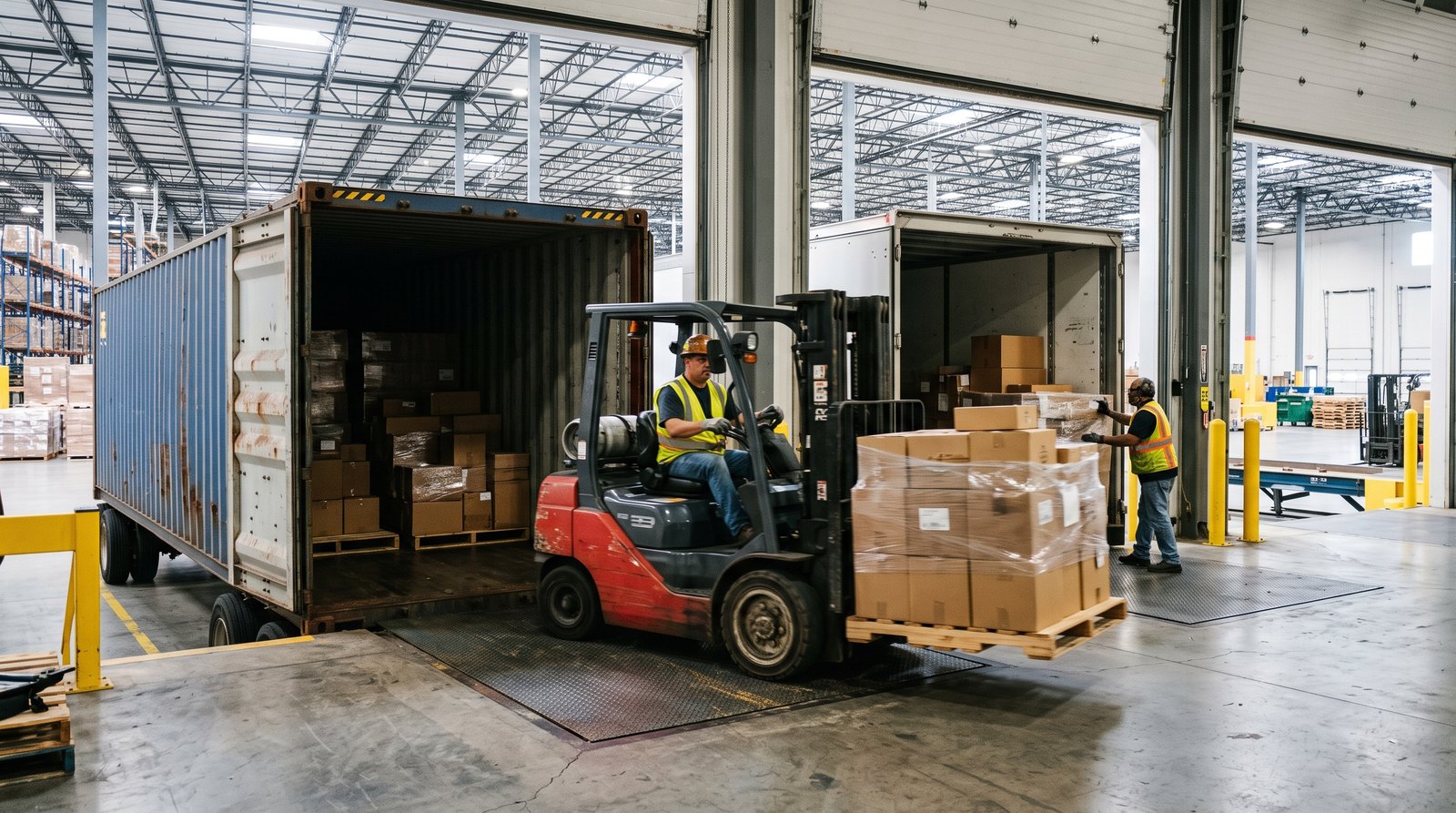
Cross-Docking vs Transloading in Denver: Which One Do You Actually Need?
Confused about cross-docking vs transloading in Denver? Use this guide to choose the right workflow based on speed, equipment change, handling, and shipment fit.
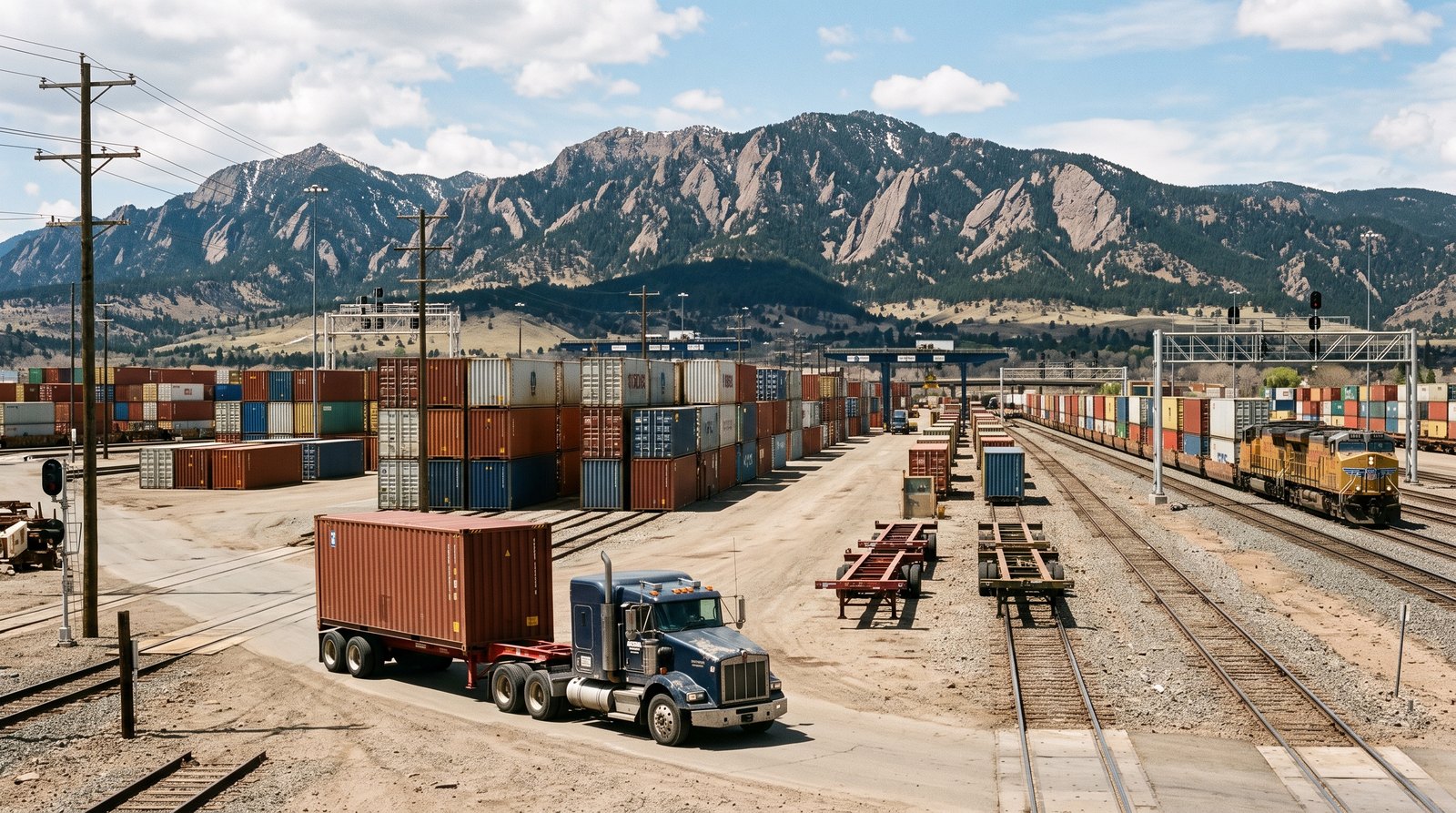
Intermodal Freight in Denver: When It Makes Sense vs Standard Trucking
Intermodal freight in Denver works well on long-haul lanes, but the transload step often determines whether the move stays on schedule. Learn when rail-plus-truck makes sense and what to plan at the cross-dock.
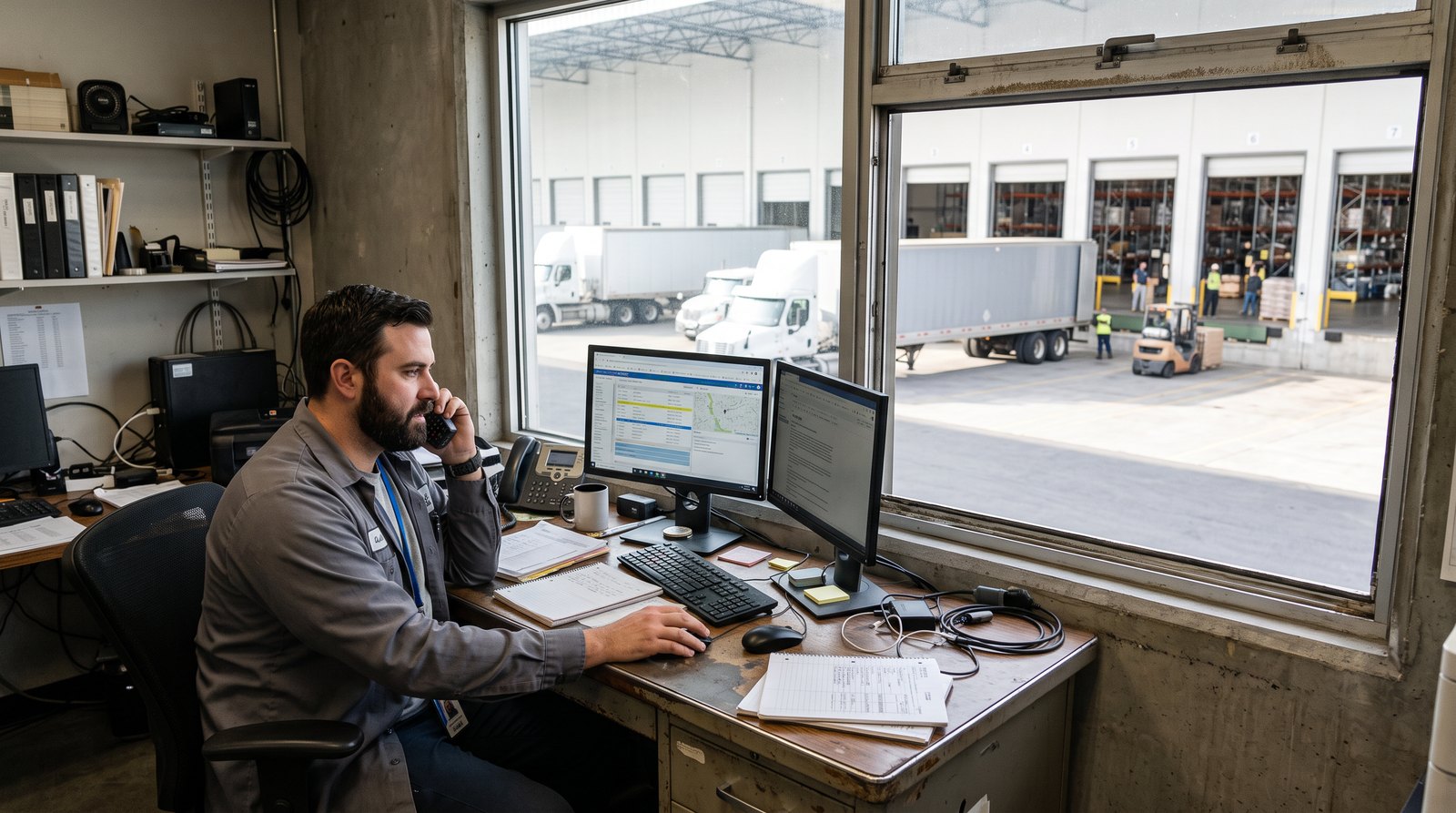
What Is a Cross-Dock Slot in Denver-and What Do You Need to Book One Fast?
Need a cross-dock slot in Denver fast? Learn what a dock slot really is, what details matter most, and what to send before you request availability.
How to Choose a Cross-Dock Partner in Denver: 12 Questions to Ask
Confirm dock capacity, who touches your freight, how exceptions are documented, and every accessorial before you compare price. Twelve questions that separate a real Denver cross-dock from a phone number.