
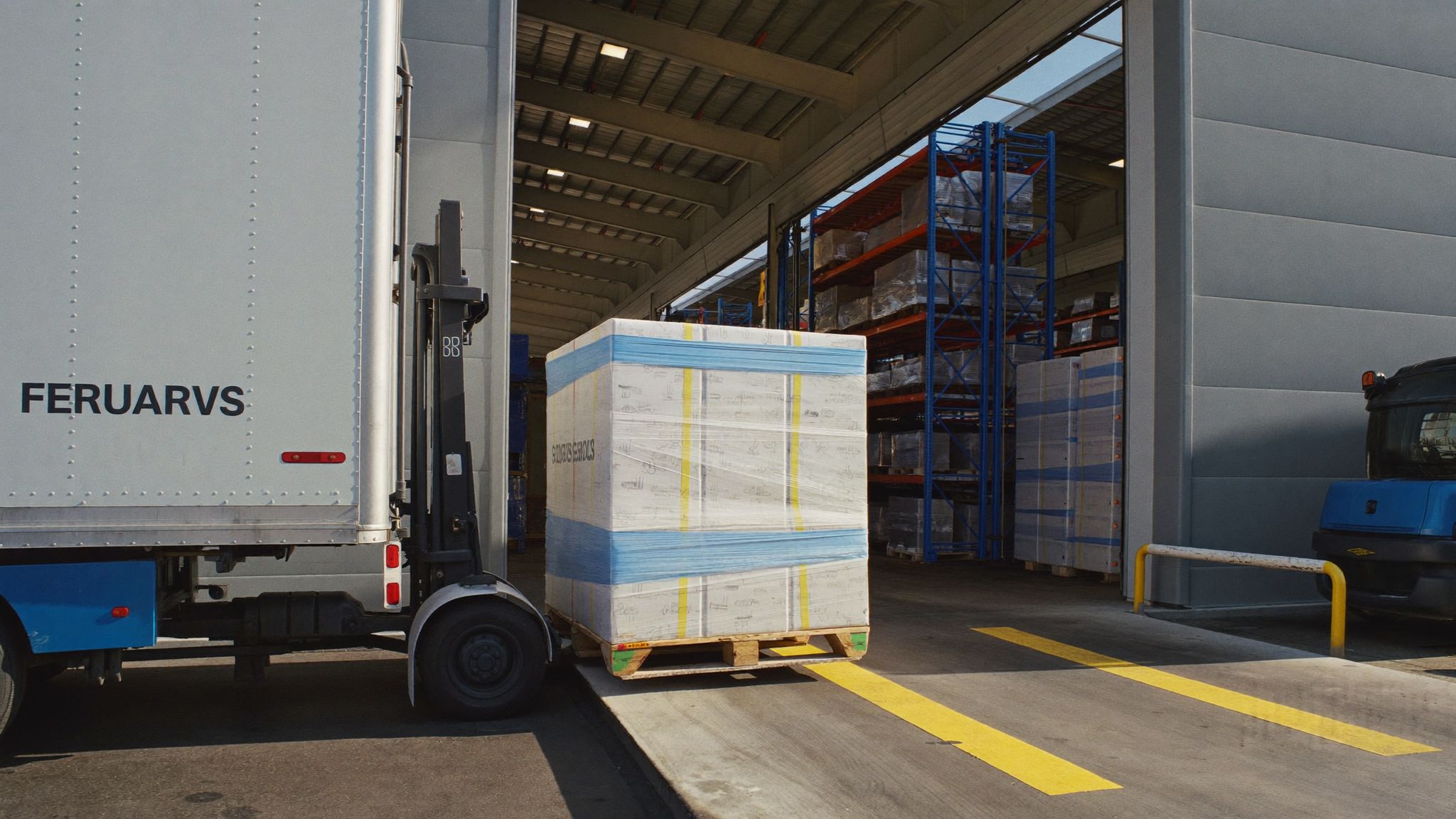
Switch from a parked trailer to warehouse space the moment you need to see, count, or touch your freight more than once. A trailer hold is cheap because nobody opens it. The second you start requesting partial pulls, condition checks, or weekly releases, the trailer becomes the expensive option.
Plenty of Denver shippers start with a trailer because it is the fastest thing to arrange, then stay there long past the point where it makes sense. Here is how to spot the switch point. Service details: warehousing in Denver.
What each option actually gives you
| Factor | Trailer hold | Racked warehouse space |
|---|---|---|
| Cost while idle | Lower | Higher |
| Access to individual pallets | Poor - last on, first off | Direct, any position |
| Documented piece counts | No | Yes, at receiving |
| Condition visibility | Only when opened | Continuous |
| Temperature swing exposure | High - a Denver trailer bakes and freezes | Controlled indoor space |
| Speed of a partial release | Slow, requires moving equipment | Same-day pull |
| Best for | One sealed load waiting on a date | Inventory that moves or must be verified |
Six signals it is time to move into a warehouse
- You have asked for a partial pull. Trailers are loaded to fill, not to pick from.
- You do not know exactly what is in there. Counts only exist if a receiving process created them.
- The wait has no end date. Open-ended holds accumulate equipment cost with nothing gained.
- The product is temperature-sensitive. Front Range summer and winter swings inside a metal box are extreme.
- You need documentation for a claim or a customer. That requires a receipt, photos, and a location record.
- The load already had a problem. Shifted or rejected freight needs a dock and rework, not more waiting - see rejected-load triage.
When staying on the trailer is the right call
A trailer hold still wins in specific cases: one sealed load with a known release date inside a week or two, freight nobody needs to inspect, and no partial releases planned. If that describes your situation, the deeper comparison is in pallet storage vs trailer hold.
Watch the accessorials either way. Holding equipment triggers charges with names that surprise people; both layover vs detention and the accessorial charges guide explain which clock is running.
How the switch actually works
- Send the details. Pallet count, footprint, height, weight, product type, and how long it will stay.
- Book an unload window. The trailer is spotted at a dock door and unloaded.
- Freight gets received. Counted, inspected, photographed, and documented - the process in warehouse receiving explained.
- Rework if needed. Collapsed or loosely wrapped pallets get rebuilt before they can be racked safely.
- Put-away and release plan. Positions assigned, then releases scheduled as you need them.
Most of that happens in a single visit when the details arrive ahead of the truck. What to send is listed in the warehouse quote checklist, and same-week timing in short-term storage in Denver.
Cost comparison worth running before you decide
Compare total cost of the whole hold, not the daily rate. For a trailer, add the daily equipment charge, every move required for access, and the risk of product loss from heat, cold, or shifting. For warehouse space, add storage for the real duration plus receiving and outbound handling. On anything longer than about two to three weeks with any movement at all, the warehouse usually comes out ahead. Pricing structures are broken down in warehouse pricing models and duration choices in short-term vs ongoing storage.
If the problem is a full receiving yard rather than long-term storage, read freight staging near Henderson and Brighton for how short holds work.
Frequently asked questions
Is trailer storage cheaper than a warehouse?
Per idle day, usually yes. Per access event, no. Two or three partial pulls typically erase the savings.
Can I get pallets out of a trailer without unloading the whole thing?
Only what is reachable at the door. Anything deeper means unloading in front of it, which is the labor a warehouse avoids.
Will my freight be counted if it goes into a warehouse?
Yes. Counting and condition documentation are part of receiving, described in warehouse receiving explained.
What if the freight only needs to change trucks?
Then you want cross-docking, not storage at all. See cross-docking vs transloading.
Does this apply to intermodal containers?
Yes, and per-diem clocks make it more urgent. See intermodal services and when intermodal makes sense.
Next step
If a trailer is sitting somewhere and you are not sure whether to keep waiting, tell us the pallet count, the product, and the date you need it moving. Use the quote form or call 303-289-4343 for a same-business-day answer, and see all services for the rest.
More in Warehousing & storage
Keep reading in this cluster
Short-Term vs Ongoing Warehouse Storage in Denver: Which Setup Fits Your Freight?
Compare short-term vs ongoing warehouse storage in Denver. Learn which setup fits your freight based on duration, movement cadence, access, and operational needs.
Seasonal Overflow Storage in Denver: How to Plan Peak-Season Warehouse Space
Seasonal overflow storage gives you extra pallet space for a defined window instead of a full-year lease. Here is how Denver shippers size, price, and schedule peak-season warehouse space without paying for capacity they never use.
What Is Warehousing? A Plain-English Guide for Denver Shippers
Warehousing means paying a staffed facility to store your freight and handle it in and out. Learn what it includes, how it differs from cross-docking and rework, and when it pays off.
3PL Warehousing vs Self-Storage: Which One Does Your Freight Need?
Self-storage rents a locked box; a warehouse gives you a dock, a forklift, and documented counts. Use this comparison to pick the right option for palletized freight in Denver.